Cellulose Gum (CMC) in Food: What It Is, What It Is Made From and How It Is Used
Cellulose gum is the food name of sodium CMC (E466). What it is made from, what it does in ice cream, baking, fondant, drinks and sauces, typical use levels, whether it is vegan, gluten-free or a starch, and how to choose a food grade.
Written byXie Aifei · Head of R&D
Technical reviewGuo Jianping · Head of Technology
Published · Updated · 8 min read
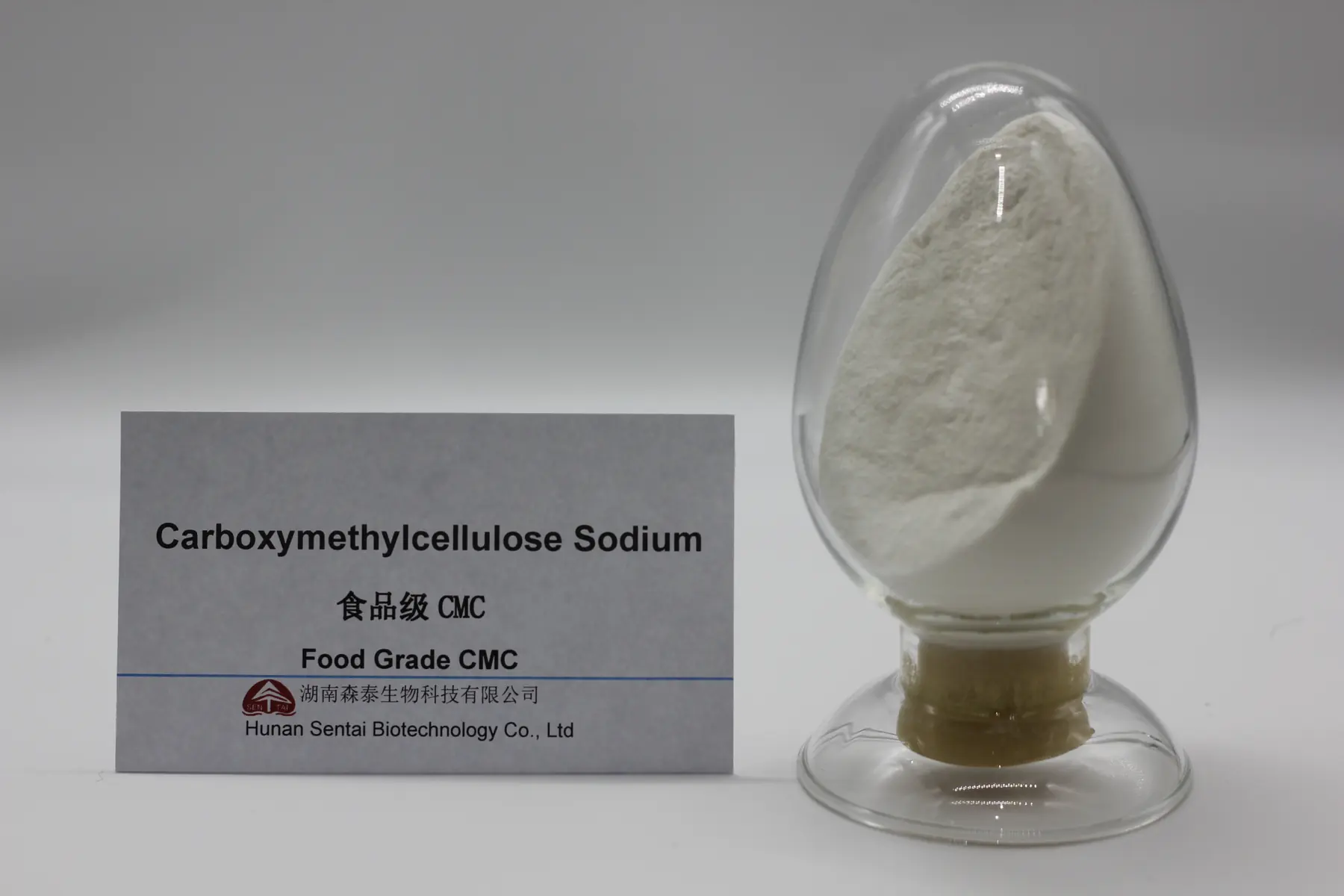
Cellulose gum is the food-label name for sodium carboxymethyl cellulose (CMC), also listed as E466 or INS 466. It is made from plant cellulose, usually wood pulp or cotton linters, and is sold as a white, tasteless powder that dissolves in water.
Food makers use it at low levels, typically 0.1–0.5 % of the recipe, to thicken, to hold water, to keep ingredients from separating and to slow the growth of ice crystals and the staling of bread. It is found in ice cream, baked goods, drinks, sauces, noodles and cake-decorating pastes. It is not a starch, it contains no gluten and it is made without animal-derived raw materials.
What cellulose gum is and what it is made from
Cellulose is the structural fibre of plants. To make cellulose gum, purified cellulose from wood pulp or cotton linters is treated with sodium hydroxide and then reacted with monochloroacetic acid, which attaches carboxymethyl groups to the cellulose chain. These groups make the chain soluble in water. Food grades are then washed with aqueous alcohol until the salt by-products are removed, and are dried and milled to a powder.
The backbone is cellulose and not starch, so human digestive enzymes do not break it down as they break down starch. In the body it behaves as a soluble dietary fibre.
What cellulose gum does in food
- Thickens water-based foods and gives body without adding taste.
- Holds water, which keeps bread, cakes and tortillas soft for longer.
- Keeps particles and pulp suspended and stops sauces and fillings from releasing water.
- Keeps ice crystals small in ice cream and frozen desserts.
- Protects milk protein from clumping in acidic drinks.
- Forms a film, which makes sugar pastes firmer and reduces the oil that fried foods take up.

Uses and typical levels by food
| Food | What CMC does | Typical level |
|---|---|---|
| Ice cream, sorbets and ice pops | Keeps ice crystals small, gives body and slows the meltdown | 0.1–0.2 % of the mix |
| Bread, cakes and tortillas | Holds moisture, keeps the crumb soft for longer and gives structure to gluten-free recipes | 0.2–0.5 % of the flour weight |
| Fondant, gum paste and edible glue | Makes sugar paste firmer, more elastic and faster to dry | About 1 % of the paste weight |
| Acidified milk drinks and drinking yoghurt | Protects milk protein from clumping at low pH (Type 9 grades) | 0.3–0.5 % |
| Juices and other drinks | Adds mouthfeel and keeps pulp suspended | 0.1–0.5 % |
| Sauces, dressings and soups | Thickens and prevents water from separating | 0.1–0.5 % |
| Jams, fillings and jellies | Controls water release and gives a spreadable body | 0.1–0.5 % |
| Instant noodles | Improves the bite and reduces oil uptake during frying | 0.1–0.5 % of the flour weight |
CMC in baking and cake decorating
In doughs and batters, CMC binds water. The dough takes up more water, the crumb stays soft for longer and the loaf stales more slowly. A typical level is 0.2–0.5 % of the flour weight; more than that can make the dough sticky. In gluten-free baking, CMC supplies some of the structure and gas-holding that gluten would give. Blend the CMC with the flour or the sugar before the liquid is added.
Cake decorators know CMC as CMC powder or as tylose powder, which is a trade name. Kneaded into fondant at about 1 % of its weight, often given as one level teaspoon per 250 g, it turns the fondant into a firmer modelling paste that holds its shape and dries faster, for figures, flowers and toppers. A pinch of CMC dissolved in a little water makes an edible glue.
CMC in ice cream, drinks and dairy
In ice cream, CMC is a stabiliser: it keeps ice crystals small and slows the meltdown, typically at 0.1–0.2 % of the mix together with a little carrageenan. In acidified milk drinks, a high-DS Type 9 grade adsorbs onto the milk protein and keeps it from clumping and settling at a pH of about 4. In juices and other drinks it adds mouthfeel and keeps pulp in suspension.
- CMC in ice cream: function, dosage and how to use it
- Food CMC Type 6 vs Type 9: which grade for acidified milk drinks
Is cellulose gum vegan, gluten-free or a starch?
- Vegan and vegetarian: cellulose gum is made from plant cellulose and from mineral or synthetic reagents, without animal-derived raw materials. Whether a finished food is vegan depends on its other ingredients.
- Gluten: it is made from wood pulp or cotton, not from wheat, barley or rye, and contains no gluten. It is widely used to give structure to gluten-free bread.
- Starch: no. Cellulose and starch are both chains of glucose, but the units are linked differently, and cellulose gum is not digested as starch is.
- Halal and kosher: these depend on the certification of the individual manufacturer and product, so ask the supplier for the certificate.
How cellulose gum is regulated
Cellulose gum is an authorised food additive in the major markets: E466 in the European Union and INS 466 in the Codex Alimentarius system. In the United States, sodium carboxymethylcellulose is generally recognised as safe (GRAS) under 21 CFR 182.1745. JECFA, the joint FAO and WHO expert committee, has set its acceptable daily intake as “not specified”, and EFSA re-evaluated the cellulose additives in 2018 and concluded that no numerical acceptable daily intake was needed. In China it is covered by GB 1886.232-2016. The permitted uses and maximum levels vary by country and by food category.
Cellulose gum compared with carrageenan, xanthan gum and guar gum
Carrageenan is extracted from red seaweed and forms gels, especially with milk protein; cellulose gum is made from plant cellulose and thickens without gelling. In ice cream and chocolate milk the two are often used together. Xanthan gum is made by fermentation and stays stable in acid and salt, which suits dressings and sauces. Guar gum is milled from a seed and thickens at a low cost, but its quality and price vary with the harvest.
How to choose a food-grade CMC
- Purity: food grades are ≥ 99.5 % pure on a dry basis, with limits for heavy metals and microbiology.
- Type: Type 6 (DS 0.75–0.90) for neutral foods such as ice cream, bakery and sauces; Type 9 (DS ≥ 0.90) for acidic and salty foods.
- Viscosity: low-viscosity grades for drinks, high-viscosity grades where body is wanted at a low dose.
- Particle form: an instant grade if lumps are a problem on your line.
- Documents: a certificate of analysis with every lot, and the standard your market requires.
Sentai food-grade CMC
Sentai makes 13 food grades of sodium CMC in Xiangtan, China, in Type 6, Type 9 and a high-DS grade, from 25–400 mPa·s as a 2 % solution to more than 5,000 mPa·s as a 1 % solution. Every grade is ≥ 99.5 % pure and is released against GB 1886.232-2016, with arsenic and lead each ≤ 2 mg/kg. Free 100–300 g samples are available with a certificate of analysis.
FAQ
What is cellulose gum?+
Cellulose gum is the food-label name for sodium carboxymethyl cellulose (CMC), a water-soluble thickener and stabiliser made from plant cellulose. It is listed as E466 in the European Union and as INS 466 in the Codex system.
What is cellulose gum made from?+
It is made from purified plant cellulose, usually wood pulp or cotton linters. The cellulose is treated with sodium hydroxide and reacted with monochloroacetic acid, and food grades are then washed to remove the salt by-products.
Is cellulose gum vegan and gluten-free?+
Cellulose gum is made from plant cellulose without animal-derived raw materials, and it contains no gluten because it is not made from wheat, barley or rye. Whether a finished food is vegan or gluten-free depends on its other ingredients.
How much CMC is used in food?+
Typically 0.1–0.5 % of the formulation. Ice cream uses about 0.1–0.2 % of the mix, bread 0.2–0.5 % of the flour weight and acidified milk drinks 0.3–0.5 %. Confirm the level in your own recipe and check the limits in your market.
What is CMC used for in baking?+
In bread, cakes and tortillas it holds water, so the crumb stays soft for longer. In gluten-free recipes it adds structure. In cake decorating, about 1 % of CMC turns fondant into a firmer modelling paste that dries faster.
Is CMC powder the same as tylose powder?+
In cake decorating, yes: tylose powder is a trade name for food-grade CMC, and both are sodium carboxymethyl cellulose. Check that the product you buy is sold as food grade.
Is cellulose gum a starch?+
No. Cellulose and starch are both made of glucose units, but the units are linked differently. Cellulose gum is not digested as starch is and behaves as a soluble dietary fibre.
Which products typically contain CMC and what are common uses in food and pharmaceuticals?+
In food, CMC (cellulose gum, E466) is found in ice cream, sauces and dressings, bread and cakes, fondant, and fruit and dairy drinks, where it thickens, holds water and stabilises at typically 0.1–0.5 % of the recipe. In medicines it is listed as carmellose sodium and is used, for example, in artificial-tear eye drops, oral suspensions and tablets. Pharmaceutical use requires a pharmacopoeia grade; Sentai supplies food grades, not pharmaceutical grades.
Can cellulose gum be used as a substitute for gluten in baking?+
Partly. Gluten forms an elastic network that holds gas; cellulose gum cannot build that network on its own. It binds water, thickens the batter and helps hold gluten-free dough together, so it replaces some of gluten's functions. It is usually combined with gluten-free flours and starches, and often with other hydrocolloids such as xanthan gum or psyllium; set the level by recipe trials.
How does cellulose gum function as a thickener in gluten-free products?+
Cellulose gum dissolves in water, and its long, negatively charged chains bind water and raise viscosity. In gluten-free batters this keeps flour and starch particles evenly suspended, helps hold gas during baking, keeps the crumb moist and slows staling.
Are there any health concerns associated with cellulose gum?+
Regulators do not consider food-grade cellulose gum harmful at the levels used in food, typically below 0.5 % of a recipe: it is E466 in the European Union, GRAS in the United States and has a JECFA acceptable daily intake of “not specified”. It is not absorbed; like other soluble fibres, very large amounts can have a laxative effect. Research on high intakes of food thickeners and gut bacteria is continuing, so anyone with a specific health concern should ask a doctor.
Sources
- FAO JECFA Monographs 11 (2011) — Sodium carboxymethyl cellulose specification
- EFSA (2018) — Re-evaluation of celluloses E 460(i)–E 469 as food additives
- 21 CFR 182.1745 — Sodium carboxymethylcellulose (US eCFR)
- EP 2737801 — Bread dough containing carboxymethyl cellulose (use levels by flour weight)
- Carboxymethyl cellulose — Wikipedia
Xie Aifei · 谢爱飞
Head of R&D
- 14 years in CMC R&D
- 7 years at Ashland's Jiangmen CMC plant
Technical review: Guo Jianping · Head of Technology
Meet the team