Anti-Redeposition Agents in Detergents: Types, How They Work and How to Choose
What an anti-redeposition agent is, how it keeps washed-off soil from greying laundry, and how CMC, polycarboxylates, nonionic cellulose ethers and soil-release polymers compare by fabric and detergent format.
Written byXie Aifei · Head of R&D
Technical reviewGuo Jianping · Head of Technology
Published · Updated · 7 min read
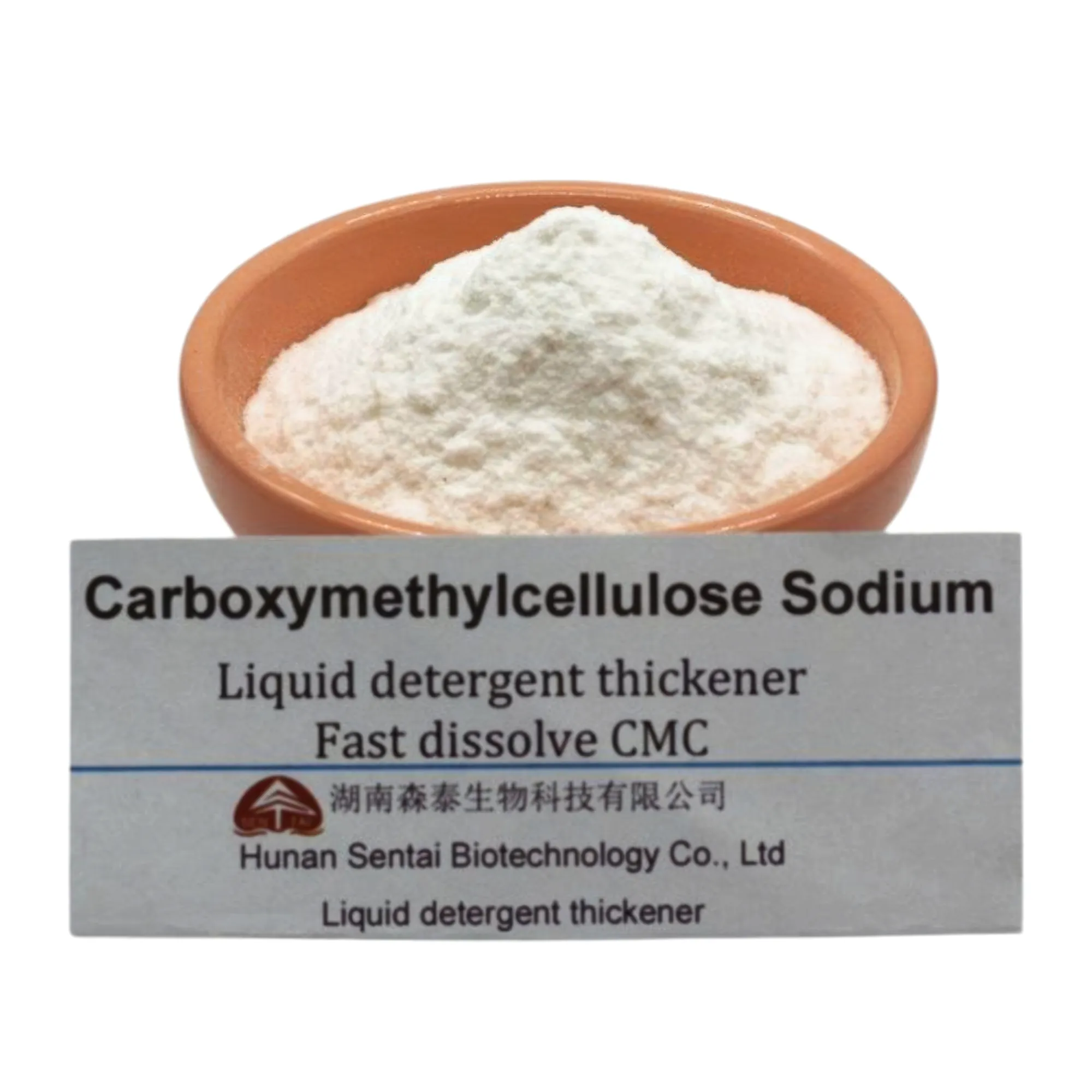
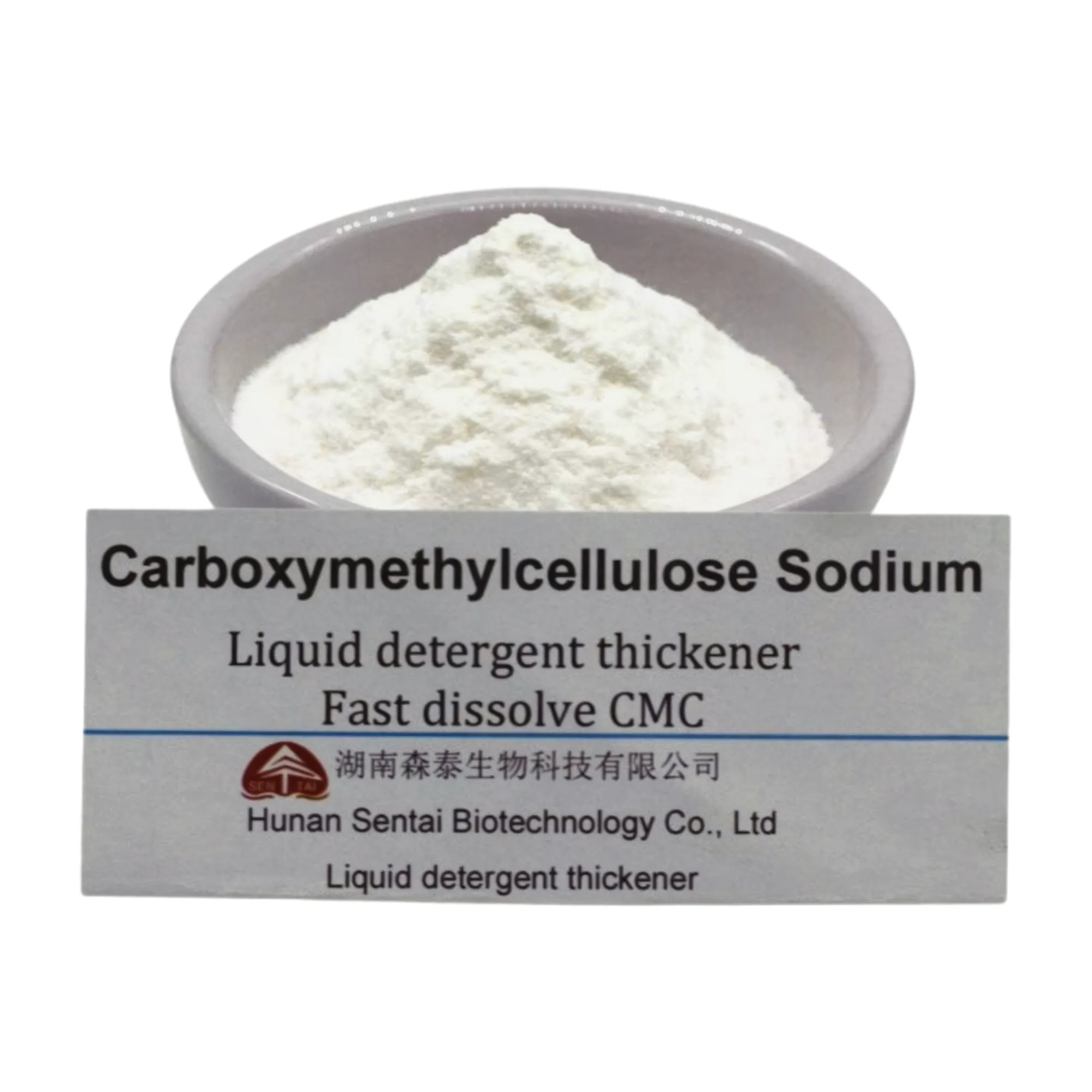
An anti-redeposition agent is a detergent ingredient that keeps soil which has been washed off a fabric suspended in the wash water, so that it is rinsed away and does not settle back on the laundry. Without one, white and light-coloured fabrics turn grey over repeated washes. The most widely used anti-redeposition agent is sodium carboxymethyl cellulose (CMC), which protects cotton. Polycarboxylates such as sodium polyacrylate disperse soil and hardness salts, and soil-release polymers and nonionic cellulose ethers protect polyester and other synthetic fibres. Most modern detergents combine two or three of these, each at a low dose.
What redeposition is and why it matters
Surfactants and builders lift clay, soot, pigment and oily soil off the fabric and into the wash water. That soil is then free to settle again, on the same garment or on a cleaner one in the same load. Each wash leaves only a trace, but the traces add up: after ten or twenty cycles, white cotton looks grey or yellow and colours look dull. This is also called greying, and the ingredients that prevent it are also sold as anti-greying agents or soil-suspending agents.
Hard water, heavy soil, a low detergent dose and a small volume of water for the load all make redeposition worse. Calcium and magnesium ions are a particular problem, because they can bridge negatively charged soil particles to the negatively charged fibre surface.
How anti-redeposition agents work
- Electrostatic repulsion: an anionic polymer adsorbs onto the fibre and onto the soil, so both carry a negative charge and repel each other.
- Steric stabilisation: the adsorbed polymer chains form a hydrated layer that keeps particles away from the fabric and from each other.
- Dispersion and sequestration: polycarboxylates keep particles finely dispersed and bind the calcium and magnesium that would bridge soil to fabric.
- Surface modification: soil-release polymers make polyester more hydrophilic, so oily soil holds less firmly and comes off more easily in the next wash.
The main types of anti-redeposition agent
| Type | Examples | Works best on | Main job | Limits |
|---|---|---|---|---|
| Sodium carboxymethyl cellulose (CMC) | Technical grades for powders, high-purity grades for liquids | Cotton and cotton blends | Keeps particulate soil such as clay and soot suspended; also thickens liquids | Weak on polyester and other synthetics; cellulase enzymes can degrade it in liquid detergents |
| Polycarboxylates | Sodium polyacrylate, acrylic–maleic copolymers | All fibres | Disperse soil, bind hardness ions and prevent scale on fabric and machine | Do not adsorb onto cotton as CMC does; slow to biodegrade |
| Nonionic cellulose ethers | Methyl cellulose (MC), HPMC, hydroxyethyl methyl cellulose | Polyester and polyester–cotton blends | Adsorb onto hydrophobic fibres; soil release and anti-redeposition | Weaker than CMC against particulate soil on cotton |
| Polyester soil-release polymers | Copolymers of polyethylene terephthalate and polyoxyethylene terephthalate (PET–POET) | Polyester | Make the fibre hydrophilic so that oily soil is released in later washes | Little effect on cotton |
| Dye-transfer inhibitors | Polyvinylpyrrolidone (PVP) and its copolymers | Coloured loads | Hold loose dye in the wash water so that it does not stain other items | Act on dissolved dye, not on particulate soil |
| Modified polyamines and graft copolymers | Ethoxylated polyethyleneimine, polyethylene glycol–vinyl acetate graft copolymers | Mixed loads; liquid detergents | Disperse clay and suspend oily soil | Higher cost; speciality polymers |
Why CMC remains the standard for cotton
Cotton is cellulose, and CMC has the same backbone, so it adsorbs onto the fibre and stays there through the wash. Its carboxylate groups add negative charge to the fibre surface and to the soil particles it coats, and the two repel each other. CMC is also made from renewable cellulose and costs less than most synthetic polymers, which is why it has been the anti-redeposition agent of laundry powders for decades.
Three properties decide how a CMC performs in this role. Detergent grades use a low degree of substitution, typically 0.4–0.6, because a chain with fewer charged groups is generally held to adsorb onto cotton more readily. Purity sets the active content: a technical grade of 55–70 % purity suits powders, where the remaining salt does no harm, and a grade of ≥ 96 % suits liquids. Viscosity matters for processing: a low-viscosity grade keeps a spray-drying slurry pumpable, and a high-viscosity grade thickens a liquid.
Choosing by detergent format and fabric
| Detergent | Typical anti-redeposition system | CMC grade type |
|---|---|---|
| Laundry powder for cotton-rich loads | CMC, with a polycarboxylate as dispersant and anti-scale aid | Technical, 55–70 % purity (Sentai ST-20, ST-50, ST-100) |
| Laundry powder for mixed cotton and polyester loads | CMC plus a soil-release polymer or a nonionic cellulose ether | Technical, 55–70 % purity |
| Liquid laundry detergent | Water-soluble polymers; CMC where it also thickens the product | High purity, ≥ 96 % (Sentai ST-300, ST-500) |
| Laundry bars and pastes | CMC, which also binds the bar | Technical or high purity, depending on the formula |
| Institutional and industrial laundry | CMC at the upper end of its dose range, with a polycarboxylate for hard water | Technical |
How much to use
A typical laundry powder carries 0.5–2.0 % technical CMC. Formulas for hard water or heavily soiled cotton sit at the higher end. Technical grades are sold at 55–70 % purity, so compare them on active content: 1 % of a 60 % grade delivers about 0.6 % sodium CMC. The dose of the other polymers depends on the product, so follow the supplier's recommendation and confirm it by test.
How anti-redeposition is tested
Wash clean white swatches together with a standard soil for several cycles, with and without the agent, at a fixed water hardness, temperature and dose. Measure the reflectance or whiteness of the swatches before the first wash and after the last; the smaller the loss, the better the anti-redeposition. Include cotton, polyester and blended swatches, because an agent that protects one fibre may do little for another. ASTM D4008 is a laboratory guide to this test.
Common problems and what to check
| Problem | Likely cause | What to check |
|---|---|---|
| White cotton turns grey after 10–20 washes | Too little active CMC, or too little detergent for the water hardness | The active content of the CMC grade and the dose per wash |
| Polyester and blends turn grey while cotton stays white | CMC does not protect synthetic fibres | Add a soil-release polymer or a nonionic cellulose ether |
| Fabric feels harsh and carries a grey-white crust | Scale from calcium salts, not redeposited soil | The builder and polycarboxylate level |
| A liquid detergent loses viscosity in storage | Cellulase or microbial attack on the CMC, or a change in salt level | Enzyme compatibility, the preservative and the electrolyte content |
FAQ
What is an anti-redeposition agent?+
It is a detergent ingredient that keeps soil which has been washed off a fabric suspended in the wash water, so that it rinses away and does not settle back on the laundry. It prevents the gradual greying of white and light-coloured fabrics.
What is the most common anti-redeposition agent in detergents?+
Sodium carboxymethyl cellulose (CMC). It adsorbs onto cotton and onto soil particles and gives both a negative charge, so the soil stays in the water. A typical laundry powder contains 0.5–2.0 % technical-grade CMC.
Which anti-redeposition agent works on polyester?+
CMC has little effect on polyester. Detergents for synthetic and mixed loads add a polyester soil-release polymer or a nonionic cellulose ether such as methyl cellulose or HPMC, which adsorb onto hydrophobic fibres.
What is the difference between an anti-redeposition agent and a soil-release polymer?+
An anti-redeposition agent works during the wash, keeping loosened soil suspended in the water. A soil-release polymer stays on the fibre after the wash and makes it easier to remove oily soil the next time. Many detergents use both.
Is an anti-greying agent the same as an anti-redeposition agent?+
Yes. Anti-greying agent, greying inhibitor and soil-suspending agent are other names for an anti-redeposition agent.
Do polyacrylates replace CMC in detergents?+
Not on cotton. Polyacrylates and acrylic–maleic copolymers disperse soil and bind hardness ions, but they do not adsorb onto cotton as CMC does. Laundry powders normally use both.
Sources
Xie Aifei · 谢爱飞
Head of R&D
- 14 years in CMC R&D
- 7 years at Ashland's Jiangmen CMC plant
Technical review: Guo Jianping · Head of Technology
Meet the team