
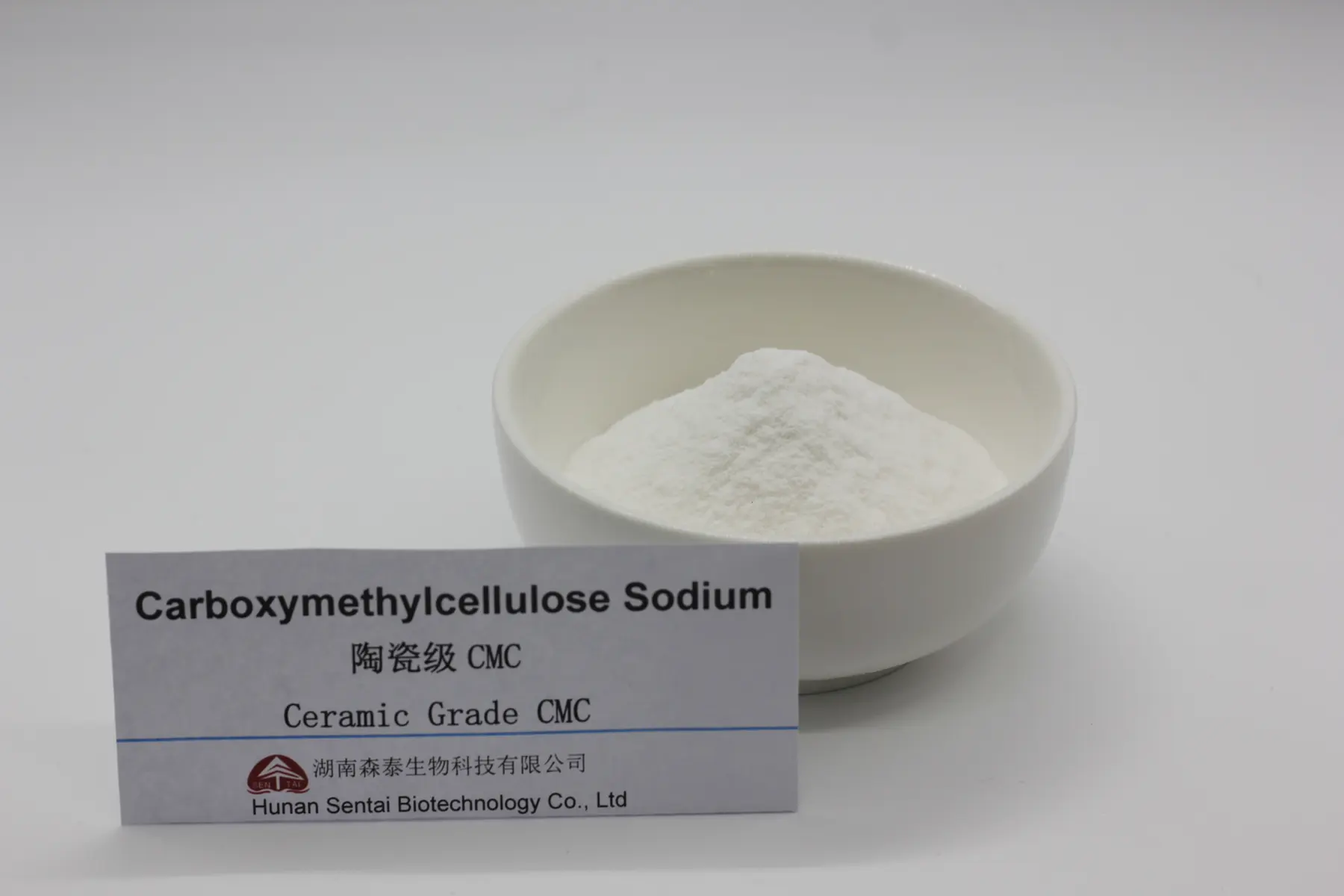
CMC · Ceramics & glazes
Ceramic-Grade CMC
Green-body binder and glaze suspension aid — nine grades from DS 0.6 to ≥ 1.0.
[01]Overview
Sentai ceramic-grade CMC strengthens green and dried bodies, keeps glaze slips suspended and smooth, and gives printing glazes and inks the rheology needed for sharp, consistent decoration. A high-end ceramic grade was launched at the 40th Ceramics China exhibition in 2026. Nine standard grades span DS 0.60 to ≥ 1.0 and 1 % viscosity 30 to 3,500 mPa·s.
- Typical dosage
- Body 0.05 – 0.15 %; glaze 0.1 – 0.3 % (typical)
- HS code
- 3912.31
- CAS No.
- 9004-32-4
What it does
- 01Raises green and dry strength of tile bodies — fewer breakages before firing
- 02Suspends glaze solids; controls drying and adhesion on the body
- 03Smooth glaze surface with fewer pinholes and crawling defects
- 04Rheology control for screen-printing glazes and inkjet glaze bases
[02]Grades & specifications
9 grades
Values are specification limits. Typical values and test methods are on the full TDS (Customer Portal or on request).
| Grade | Viscosity · mPa·s | DS | Purity % | pH | Moisture % | Spec sheet |
|---|---|---|---|---|---|---|
| C-1001 | 400–700 @1% | ≥ 1 | ≥ 95 | 6.5–8.5 | ≤ 10 | Spec sheet → |
| C-1002 | 400–700 @1% | ≥ 0.95 | ≥ 95 | 6.5–8.5 | ≤ 10 | Spec sheet → |
| C-1592 | 800–1200 @1% | ≥ 0.9 | ≥ 95 | 6.5–8.5 | ≤ 10 | Spec sheet → |
| C-0492 | 200–400 @1% | ≥ 0.95 | ≥ 95 | 6.5–8.5 | ≤ 10 | Spec sheet → |
| C-1583 | 800–1200 @1% | ≥ 0.8 | ≥ 80 | 6.5–8.5 | ≤ 10 | Spec sheet → |
| C-0664 | 400–700 @1% | ≥ 0.6 | ≥ 60 | 6.5–8.5 | ≤ 10 | Spec sheet → |
| C-2074 | 2000–2500 @1% | ≥ 0.9 | ≥ 90 | 6.5–8.5 | ≤ 10 | Spec sheet → |
| 9HHigh viscosity | 2500–3500 @1% | ≥ 0.8 | ≥ 90 | 6.5–8.5 | ≤ 10 | Spec sheet → |
| 9LLow viscosity · printing glaze | 30–50 @1% | ≥ 0.9 | ≥ 90 | 6.5–8.5 | ≤ 10 | Spec sheet → |
Viscosity windows
Brookfield viscosity, mPa·s, 25 °C — log scale
Grade map
Each bubble is a grade: degree of substitution on the horizontal axis, minimum purity on the vertical, bubble size by viscosity.
Product photos
The real product.
[03]Applications
Ceramics & glazes
- Floor and wall tile bodies
- Glaze slips and engobes
- Printing glazes and decorative inks
- Sanitary ware and refractories
[05]Packaging & supply
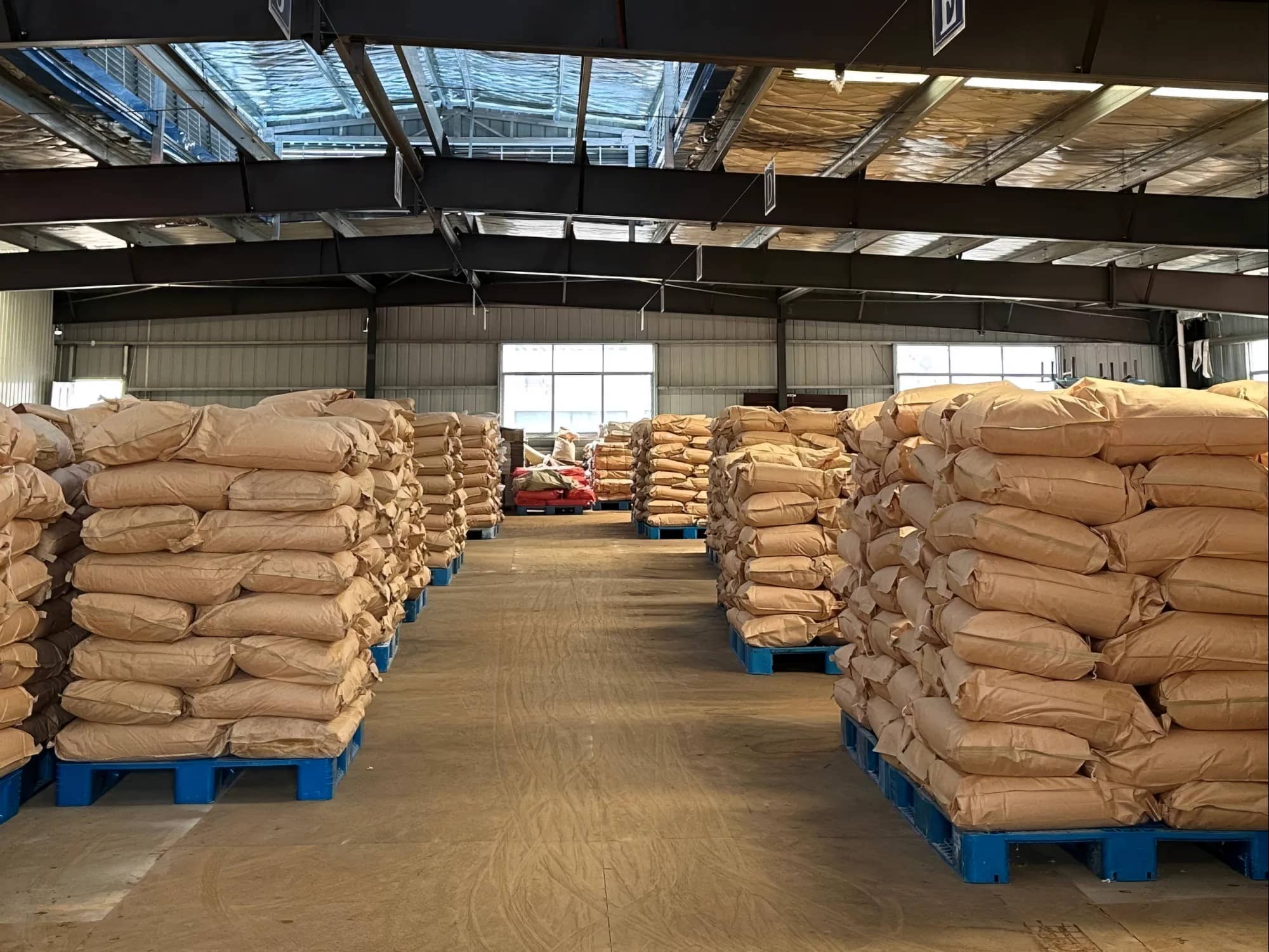
Packed for export.
- Packaging
- 25 kg kraft-composite or PP woven bag with food-grade PE liner · 500 kg / 1 t jumbo bags
- Palletising
- 40 bags = 1 t per pallet, fumigation-free plywood, stretch-wrapped
- Container load
- 20′ GP ≈ 17–20 t · 40′ HQ ≈ 25–28 t
- MOQ
- 1 t for industrial grades · battery grade negotiable
- Lead time
- 7–15 days (stock grades) · 20–30 days (custom)
- Samples
- Free 100–300 g samples, courier collect
- Payment
- T/T 30% deposit, 70% against B/L copy · L/C · D/P
- Incoterms
- FOB · CFR · CIF · EXW
- Documents
- COA · TDS · MSDS/SDS · CO · Form A · Form E
- Inspection
- Customer-appointed SGS / BV inspection accepted
- Port of loading
- Guangzhou — other South China ports on request
[06]FAQ
Ceramic CMC
Why do ceramic grades range from DS 0.6 to over 1.0?+
Higher DS improves salt tolerance and solution clarity, which matters for glazes containing soluble salts and for printing glazes. Lower-DS, lower-purity grades are cost-effective body binders where those properties are less critical.
Qualify it in your process.
Free 100–300 g samples with COA, shipped within days. Tell us your formulation and target viscosity — our applications lab will suggest the closest grade.
Related product families
Products
ST
Battery-Grade CMC
≥ 99.5 % purity anode binder & dispersant for graphite and silicon-carbon electrodes.
R
Instant CMC
Surface-treated CMC that disperses lump-free and reaches full viscosity fast — DS ≥ 0.95.
F
Food-Grade CMC
Cellulose gum (E466) to GB 1886.232-2016 — thickener, stabiliser and protein protector.
PAC
Oil-Drilling PAC & CMC
Fluid-loss control and viscosity in fresh water to saturated brine — tested to GB/T 5005.
Insights
Related
- Guide
Jun 23, 2026 · 6 min read
How to Choose CMC for Ceramic Tile Bodies, Glazes and Printing Glazes
How CMC works as a green-body binder, glaze suspension aid and printing-glaze thickener, with a selection guide to Sentai's nine ceramic grades from DS 0.6 to ≥ 1.0.
 Guide
Oct 10, 2026 · 8 min read
How to Choose Battery-Grade CMC for Lithium-ion Anodes: The Specifications That Matter
A practical guide to specifying battery-grade CMC: purity, chloride, DS, viscosity window versus slurry solids, gel count, fibre class, particle size and moisture, plus test methods and an incoming-inspection checklist.
 Guide
Sep 22, 2026 · 8 min read
How to Read a CMC Spec Sheet: Degree of Substitution vs Viscosity vs Purity
What DS, viscosity and purity really tell you about a sodium CMC grade, why 1 % and 2 % Brookfield viscosities cannot be converted, and how DS drives salt tolerance, acid stability and clarity.