
FAQ
Questions buyers ask.
Terms, logistics, documents and grade selection — answered.
Ordering
Can I get a free sample?+
Yes. Sentai provides free samples of 100–300 g per grade with a certificate of analysis; the courier cost is paid by the buyer or sent freight-collect. Request samples from any product page or the contact form.
What is the minimum order quantity?+
Industrial grades start at 1 tonne. Battery-grade MOQ is negotiable so that cell makers can qualify material at pilot scale.
How long is the lead time?+
Stock grades ship in 7–15 days after deposit; custom grades in 20–30 days. Peak-season lead times can extend to about one month.
What payment terms do you accept?+
Typically T/T with 30 % deposit and 70 % against copy of the bill of lading. L/C at sight and D/P are also accepted for established customers.
Which Incoterms do you quote?+
FOB, CFR, CIF and EXW. The usual port of loading is Guangzhou; other South China ports are available on request.
Packaging & logistics
How is CMC packed?+
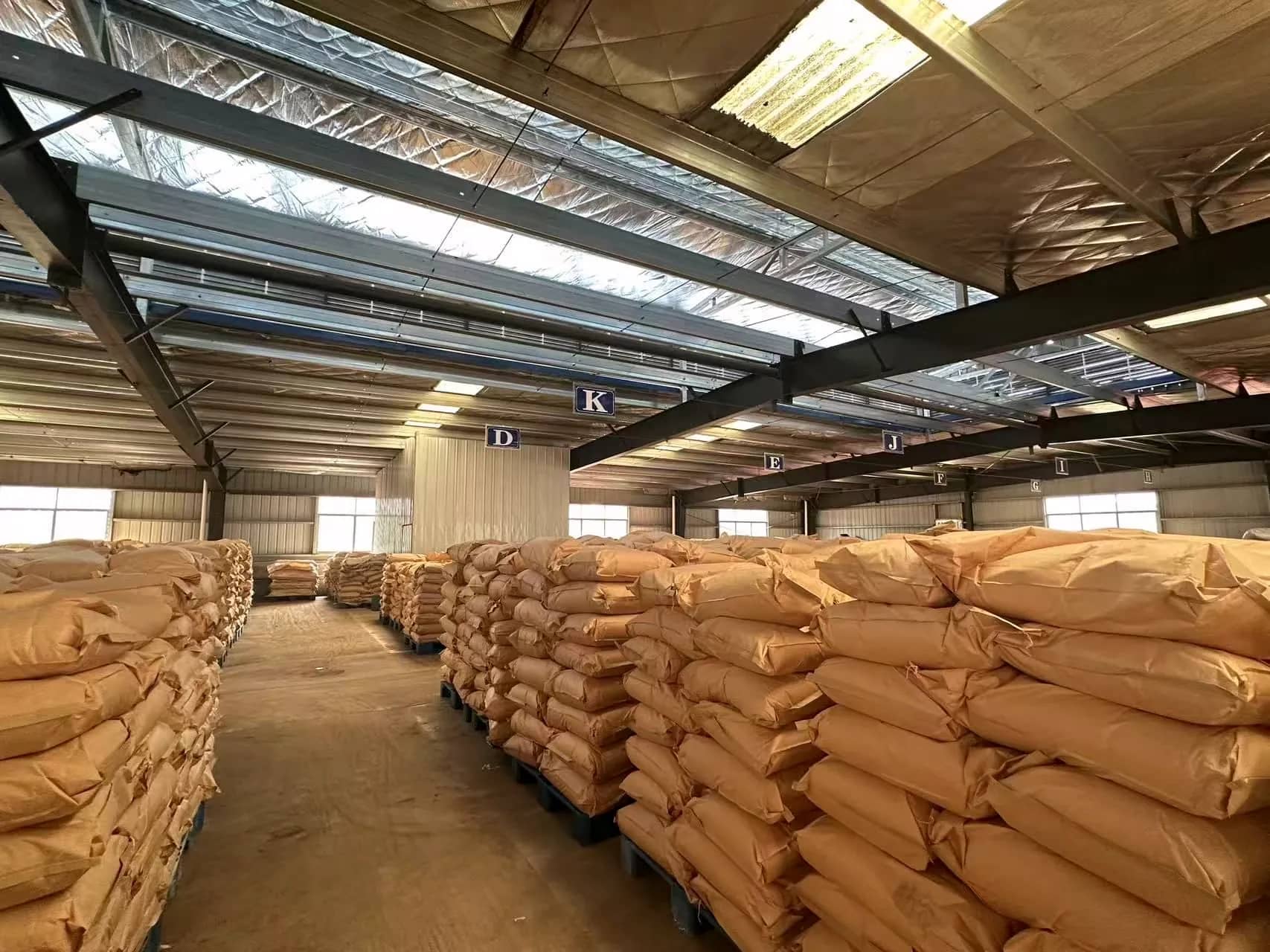
25 kg kraft-composite or PP woven bags with a food-grade PE liner; 500 kg and 1 t jumbo bags on request. 40 bags (1 t) per fumigation-free plywood pallet, stretch-wrapped. Custom labels and OEM packaging are available.
How much fits in a container?+
Approximately 17–20 t in a 20′ GP and 25–28 t in a 40′ HQ, depending on grade bulk density and whether pallets are used.
Which documents come with a shipment?+
Commercial invoice, packing list, bill of lading, certificate of analysis per lot, SDS and TDS, plus certificate of origin (CO, Form A or Form E) as required.
Can our inspector check the goods?+
Yes. Customer-appointed SGS, BV or other third-party inspection before loading is welcome.
Technical questions
How do I choose the right CMC grade?+
Start from the application, then target viscosity at your use concentration, then degree of substitution (higher DS for salt, hard water, acid or clarity), purity requirements and dissolution speed (instant CMC for lump-free make-down). Our engineers recommend a grade and send samples.
What is the difference between 1 % and 2 % viscosity?+
High-viscosity grades are specified as a 1 % solution and low-viscosity grades as a 2 % solution, both at 25 °C with a Brookfield viscometer on a dry basis. Never compare values measured at different concentrations.
How should CMC be stored?+
In the original sealed bags in a cool, dry, ventilated warehouse, off the floor and away from heat and moisture. CMC is hygroscopic: reseal opened bags and use them promptly.
Do you offer customised grades?+
Yes — viscosity window, DS, particle size, granulation and surface treatment can be tailored, and OEM packaging is available.
Products
Battery CMCWhy does chloride content matter in battery-grade CMC?+
Residual sodium chloride from etherification can corrode the copper current collector and raise self-discharge. Sentai battery grades are alcohol-washed to ≤ 0.50 % chloride (as NaCl), and every batch is titrated before release.
Battery-Grade CMCBattery CMCWhat do the gel-particle and filtration figures tell me?+
Undissolved gels and fibres cause pinholes, streaks and filter blinding on the coater. Sentai counts gel particles per 4 cm² film and grades fibre and insolubles A/B; a 500 mL vacuum-filtration time is used as a quick check of slurry cleanliness.
Battery-Grade CMCBattery CMCCan Sentai match the viscosity of my current imported CMC?+
Yes. Send the current material's TDS or a sample: our lab benchmarks viscosity, DS, chloride, gel count and filtration side by side and proposes the closest ST grade or a custom viscosity window.
Battery-Grade CMCBattery CMCWhat is the minimum order for battery grade?+
Battery-grade MOQ is negotiable so that cell makers can qualify material at pilot scale. Free 100–300 g samples are available for lab evaluation.
Battery-Grade CMCFood CMCWhat is the difference between Type 6 and Type 9 food CMC?+
The number reflects the degree of substitution. Type 6 (DS 0.75–0.90) is the economical thickener for neutral foods. Type 9 (DS ≥ 0.90) carries more carboxymethyl groups, so it stays soluble and protective at low pH — the requirement for acidified milk drinks.
Food-Grade CMCFood CMCWhich standard does Sentai food-grade CMC meet?+
GB 1886.232-2016, China's national food-safety standard for sodium carboxymethyl cellulose, including purity, sodium glycolate, heavy metals and microbiological limits. Contact us for the certificate of analysis and the regulatory documents your market requires.
Food-Grade CMCFood CMCCan you supply Halal or Kosher documentation?+
Please tell us your destination market and certification requirement when you request a quotation; our export team will confirm the documentation available for the grade you select.
Food-Grade CMCInstant CMCHow is instant CMC different from regular CMC?+
Regular CMC hydrates the moment it touches water, so the outside of a clump gels and seals dry powder inside ("fish-eyes"). Sentai's surface treatment delays hydration for a few seconds — long enough for each particle to disperse — so viscosity builds evenly and quickly with simple stirring.
Instant CMCInstant CMCDoes the surface treatment affect the final solution?+
No. Once dispersed, the treatment releases and the polymer develops the same viscosity profile as an untreated CMC of equal molecular weight. Final viscosity, clarity and stability are specified on the TDS.
Instant CMCDrilling PAC/CMCWhen should I use PAC-LV versus PAC-HV?+
PAC-LV controls filtrate loss with minimal viscosity increase — ideal for weighted muds where rheology is already high. PAC-HV adds viscosity and carrying capacity as well as fluid-loss control, typical for low-solids and polymer muds.
Oil-Drilling PAC & CMCDrilling PAC/CMCWhat is the difference between PAC and drilling CMC?+
Both are carboxymethyl cellulose. PAC has a higher and more uniform degree of substitution (≥ 0.9), which gives it better salt and calcium tolerance; technical drilling CMC is the economical choice for fresh-water systems.
Oil-Drilling PAC & CMCDrilling PAC/CMCIs your PAC tested to API 13A?+
Sentai drilling grades are specified and tested against China's GB/T 5005 drilling-fluid materials standard (fresh water, 4 % brine and saturated brine). If your tender requires API 13A test data, request it with your enquiry and our lab will confirm.
Oil-Drilling PAC & CMCPaper CMCWhich viscosity should I choose for coating colours?+
Low-viscosity grades (roughly 7–50 mPa·s at 2 %) give water retention without excessive high-shear viscosity, which keeps blade coating runnable at high solids. Medium grades suit size-press and film-press applications. Send your formulation and our paper team will recommend a window.
Paper-Grade CMCCeramic CMCWhy do ceramic grades range from DS 0.6 to over 1.0?+
Higher DS improves salt tolerance and solution clarity, which matters for glazes containing soluble salts and for printing glazes. Lower-DS, lower-purity grades are cost-effective body binders where those properties are less critical.
Ceramic-Grade CMCToothpaste CMCWhich grade suits a high-salt or herbal toothpaste?+
Choose a high-DS grade such as IH9 (DS ≥ 0.95) or IH10 (DS ≥ 1.0): more uniform substitution keeps the paste stable against electrolytes and plant extracts.
Toothpaste & Daily-Chemical CMCCMSWhen is CMS a better choice than CMC?+
When cost per kilogram of thickening matters more than salt tolerance or clarity. CMS works well in paper surface sizing, drilling-mud fluid-loss control and textile sizing; CMC is preferred where high DS, high purity or long-term solution stability are required.
Sodium Carboxymethyl Starch (CMS)