

CMS · Paper, drilling, textiles & detergents
Sodium Carboxymethyl Starch (CMS)
Cost-effective starch ether — 5,000 t/yr dedicated capacity.
[01]Overview
Sodium carboxymethyl starch (CMS) is a water-soluble anionic starch ether that thickens, binds and retains water at a lower cost than cellulose ethers. Sentai runs a dedicated 5,000 t/yr CMS line producing high-, medium- and low-viscosity grades plus a paper-grade CMS used as a filler stabiliser, retention aid, surface-sizing agent and coating binder.
- HS code
- 3505.10
- CAS No.
- 9063-38-1
What it does
- 01Economical thickener and binder
- 02Filler retention and surface sizing in paper
- 03Fluid-loss reducer in drilling muds
- 04Textile sizing and printing thickener
[02]Grades & specifications
4 grades
Values are specification limits. Typical values and test methods are on the full TDS (Customer Portal or on request).
| Grade | Viscosity · mPa·s | DS | Purity % | pH | Moisture % | Fineness | Appearance | Spec sheet |
|---|---|---|---|---|---|---|---|---|
| CMS-HHigh viscosity | 150–200 @2% | 0.3–0.6 | ≥ 80 | 8–12 | ≤ 12 | 60–80 mesh | White to yellowish powder | Spec sheet → |
| CMS-MMedium viscosity | 80–120 @2% | 0.3–0.85 | ≥ 80 | 8–12 | ≤ 12 | 60–80 mesh | — | Spec sheet → |
| CMS-LLow viscosity | 8–60 @2% | 0.3–0.85 | ≥ 80 | 8–12 | ≤ 12 | 60–80 mesh | — | Spec sheet → |
| CMS-PPaper grade | 10–300 @2% | 0.3–0.85 | — | 7–11 | ≤ 12 | — | — | Spec sheet → |
Viscosity windows
Brookfield viscosity, mPa·s, 25 °C — log scale
Grade map
Each bubble is a grade: degree of substitution on the horizontal axis, minimum purity on the vertical, bubble size by viscosity.
Product photos
The real product.
[03]Applications
Paper, drilling, textiles & detergents
- Papermaking (wet end, size press, coating)
- Drilling fluids
- Textile sizing and printing
- Detergents, building materials and food-processing aids
[05]Packaging & supply
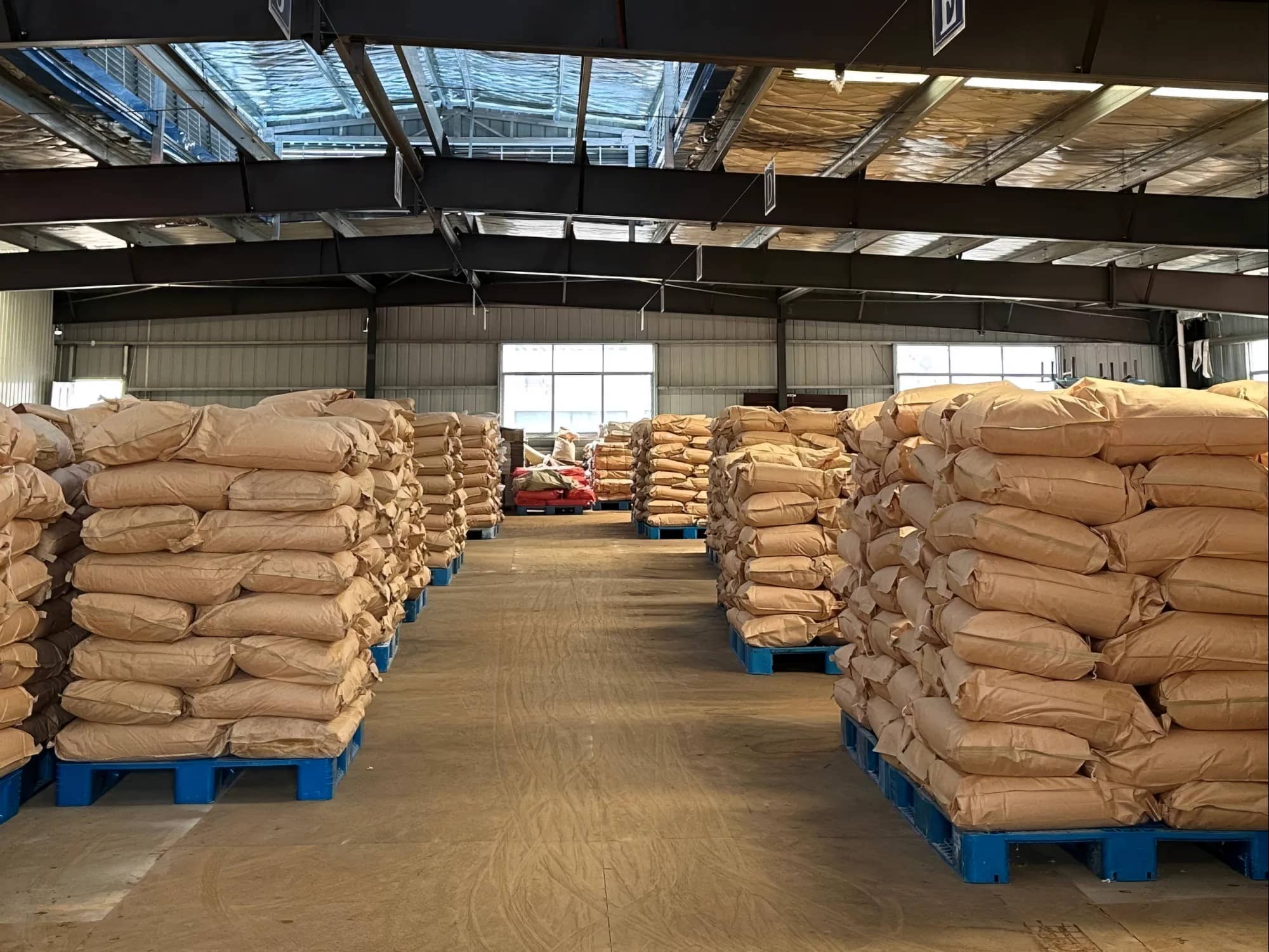
Packed for export.
- Packaging
- 25 kg kraft-composite or PP woven bag with food-grade PE liner · 500 kg / 1 t jumbo bags
- Palletising
- 40 bags = 1 t per pallet, fumigation-free plywood, stretch-wrapped
- Container load
- 20′ GP ≈ 17–20 t · 40′ HQ ≈ 25–28 t
- MOQ
- 1 t for industrial grades · battery grade negotiable
- Lead time
- 7–15 days (stock grades) · 20–30 days (custom)
- Samples
- Free 100–300 g samples, courier collect
- Payment
- T/T 30% deposit, 70% against B/L copy · L/C · D/P
- Incoterms
- FOB · CFR · CIF · EXW
- Documents
- COA · TDS · MSDS/SDS · CO · Form A · Form E
- Inspection
- Customer-appointed SGS / BV inspection accepted
- Port of loading
- Guangzhou — other South China ports on request
[06]FAQ
CMS
When is CMS a better choice than CMC?+
When cost per kilogram of thickening matters more than salt tolerance or clarity. CMS works well in paper surface sizing, drilling-mud fluid-loss control and textile sizing; CMC is preferred where high DS, high purity or long-term solution stability are required.
Qualify it in your process.
Free 100–300 g samples with COA, shipped within days. Tell us your formulation and target viscosity — our applications lab will suggest the closest grade.
Related product families
Products
ST
Battery-Grade CMC
≥ 99.5 % purity anode binder & dispersant for graphite and silicon-carbon electrodes.
R
Instant CMC
Surface-treated CMC that disperses lump-free and reaches full viscosity fast — DS ≥ 0.95.
F
Food-Grade CMC
Cellulose gum (E466) to GB 1886.232-2016 — thickener, stabiliser and protein protector.
PAC
Oil-Drilling PAC & CMC
Fluid-loss control and viscosity in fresh water to saturated brine — tested to GB/T 5005.
Insights
Related
- Guide
Jul 21, 2026 · 6 min read
CMC vs CMS: Carboxymethyl Cellulose or Carboxymethyl Starch — Cost, Performance and Where Each Wins
How carboxymethyl cellulose and carboxymethyl starch differ in chemistry, viscosity, stability and cost in use, and where each is the better choice in paper, drilling fluids, textiles and detergents.
 Guide
Oct 10, 2026 · 8 min read
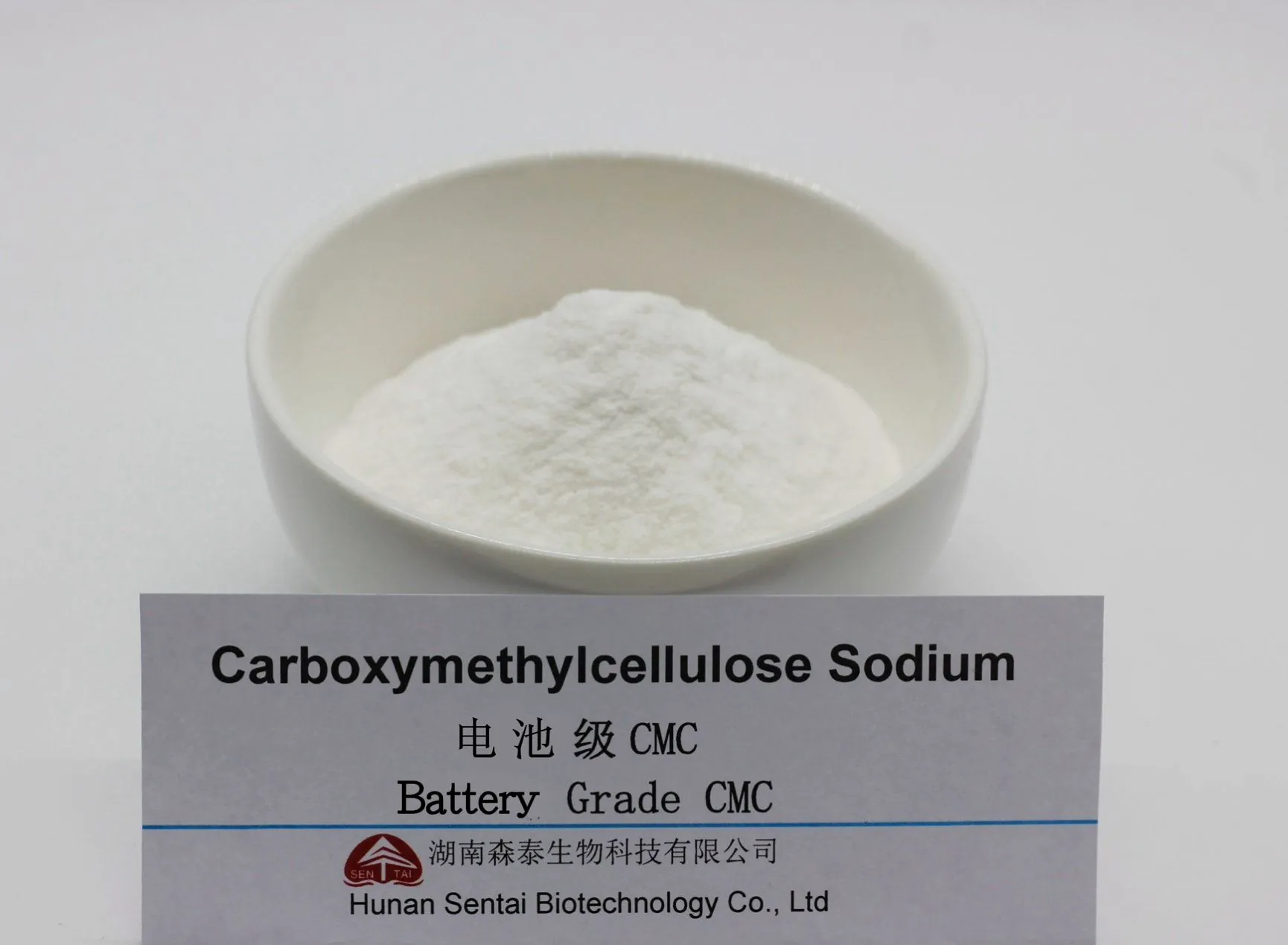
How to Choose Battery-Grade CMC for Lithium-ion Anodes: The Specifications That Matter
A practical guide to specifying battery-grade CMC: purity, chloride, DS, viscosity window versus slurry solids, gel count, fibre class, particle size and moisture, plus test methods and an incoming-inspection checklist.
 Guide
Sep 22, 2026 · 8 min read
How to Read a CMC Spec Sheet: Degree of Substitution vs Viscosity vs Purity
What DS, viscosity and purity really tell you about a sodium CMC grade, why 1 % and 2 % Brookfield viscosities cannot be converted, and how DS drives salt tolerance, acid stability and clarity.