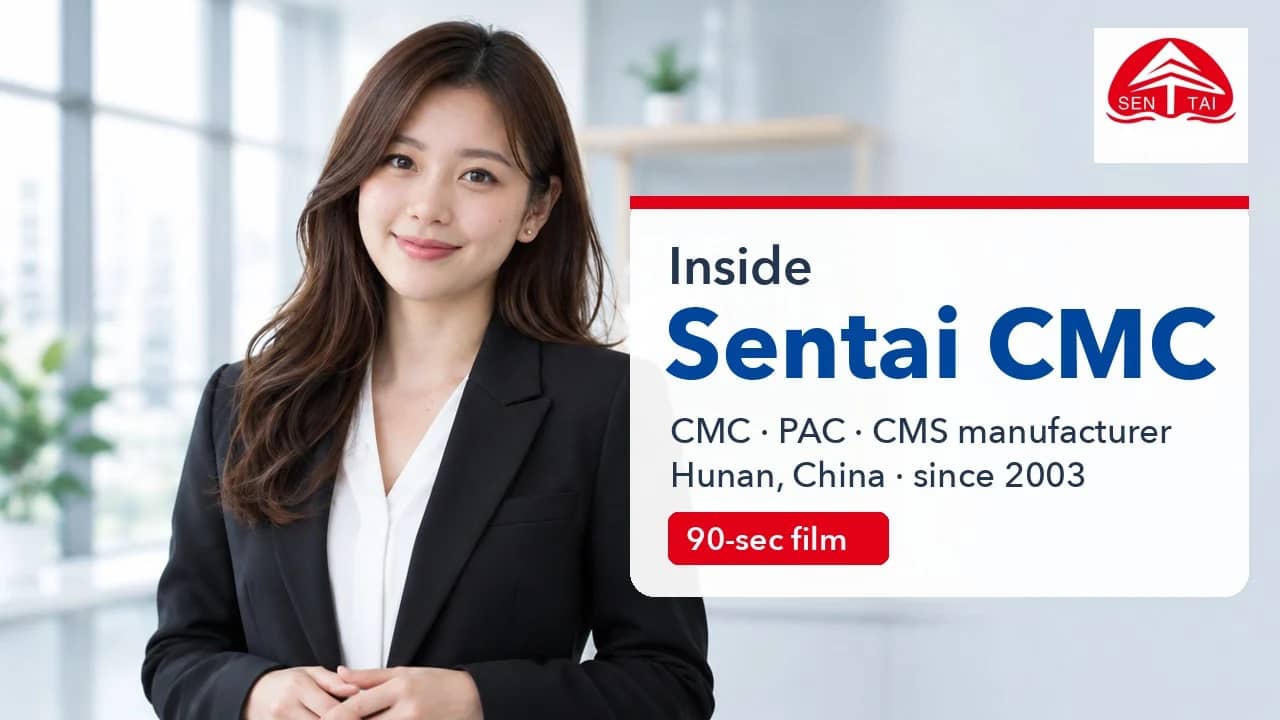
Sentai CMC in 90 Seconds: Plant, Team, Grades and Uses
Our 90-second film: the Xiangtan CMC plant, the ex-Ashland technical team, ISO and IATF 16949 quality, 82 grades and seven applications.
Sentai technical team · · 2 min read
Who makes your CMC, and how? In this 90-second film Jenny walks you through Hunan Sentai Biotechnology: the plant in Xiangtan, the technical team, the documented process, the certificates, the 82 grades and the industries they go into.
What the film covers
- The plant: one specialist site in Xiangtan, Hunan, making sodium CMC since 2003 — 10,000 t a year of CMC and PAC plus 5,000 t of CMS (carboxymethyl starch).
- The team: our technical staff came from Ashland's former CMC plant in Jiangmen and work with three university partners (Beijing Institute of Technology, Central South University and South China University of Technology).
- The process: alkalisation and etherification in kneader reactors, then washing, drying and milling; refined grades reach at least 99.5 % purity.
- Quality: a certificate of analysis with every batch; ISO 9001, ISO 14001 and IATF 16949 (AENOR, valid to 31 May 2029).
- The range: 82 grades in 13 product families, from 5 to 8,000 mPa·s.
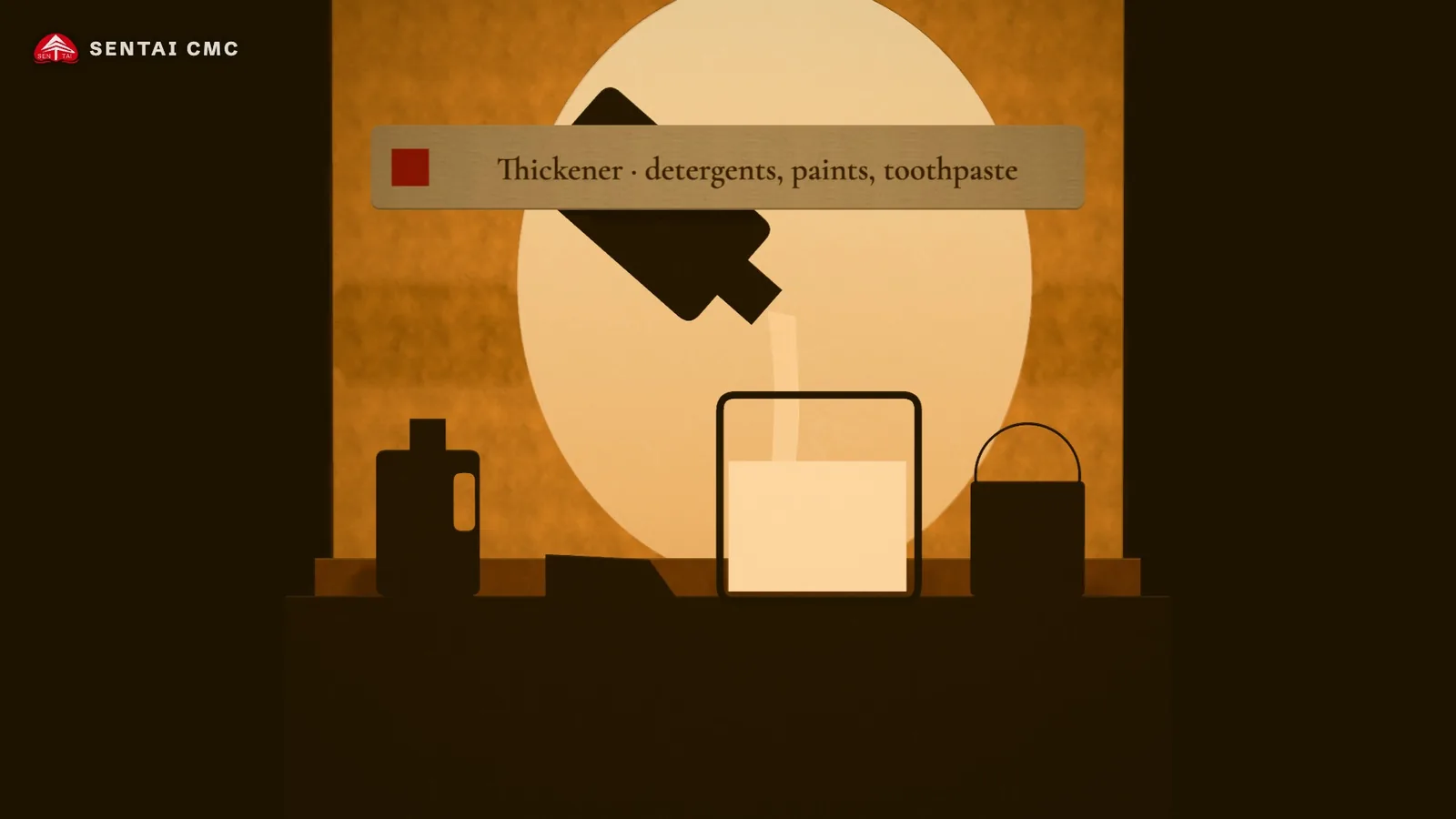
- Applications: detergents, paper, ceramics, oil drilling, food and drinks, toothpaste and battery anodes.
- Export: 25 kg bags or jumbo bags, shipped via Guangzhou; lead time 7–15 days.
Watch and share
Read next
Transcript
Hi, I'm Jenny from Sentai. Your laundry detergent, coated paper, even a lithium-ion battery — they all rely on one ingredient: CMC. Let me show you where ours is made.
Hunan Sentai Biotechnology has made CMC since 2003, in one specialist plant in Xiangtan, Hunan — 10,000 tonnes a year of CMC and PAC, plus 5,000 tonnes of CMS. Our technical team came from Ashland's former CMC plant in Jiangmen, with more than 70 years of combined experience, and we develop new grades with three university labs.
Cellulose is alkalised, etherified in kneader reactors, then washed and dried — refined grades reach 99.5 percent purity. Every batch ships with a certificate of analysis, from a plant certified to ISO 9001, 14001 and IATF 16949.
So what does that give you? 82 grades in 13 product families — each one tuned for a single job. It thickens liquid detergents and keeps soil off the wash, coats paper, binds ceramic tiles, and controls fluid loss in drilling mud. It stabilises drinks, gives toothpaste its body, and binds graphite in battery anodes.
Packed in 25 kg bags or jumbo bags, it ships from Guangzhou to customers across the Americas, Asia, Europe and Africa. Tell me what you're making — we'll match the grade and send you a free sample. Find us at sentai-cmc.com.
Ashland is a trademark of its owner; Sentai is not affiliated with Ashland.
FAQ
Where is Sentai's CMC plant?+
In the Tianyi Demonstration Zone of Xiangtan County, Hunan, China (No. 275 Yingchun Road). Export orders ship through Guangzhou; other South China ports can be arranged.
How much CMC does Sentai make?+
The nameplate capacity is 10,000 tonnes a year of CMC and PAC, plus 5,000 tonnes a year of CMS.
Which certificates does Sentai hold?+
ISO 9001 and ISO 14001 for the production of CMC and CMS, and IATF 16949 for the production of sodium carboxymethyl cellulose (AENOR, valid to 31 May 2029). Every batch ships with a certificate of analysis.
Is the presenter a real person?+
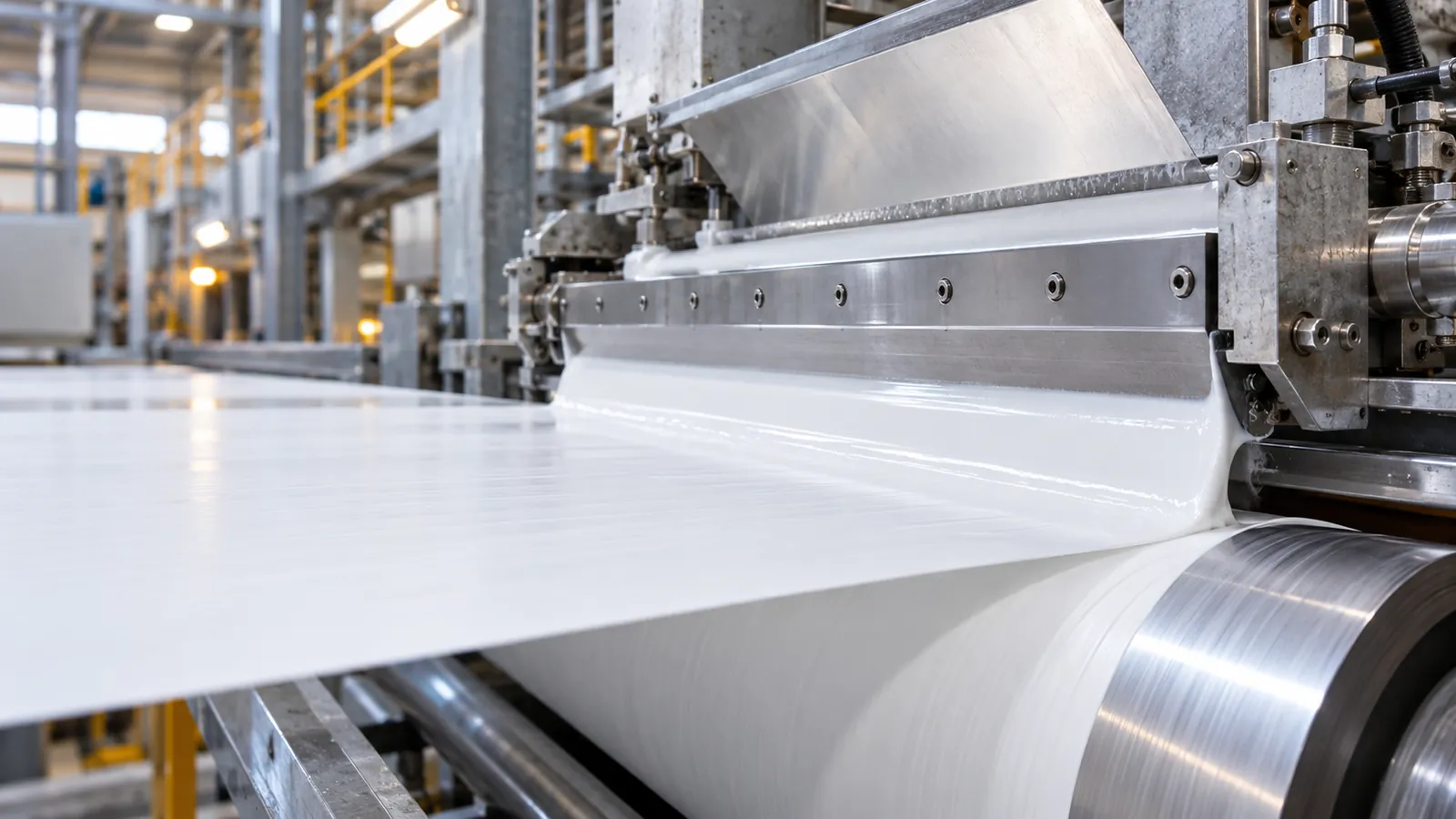
No. Jenny is an AI-generated presenter and the narration is an AI voice. The plant, laboratory and loading shots are animated from Sentai's own photographs; the application scenes are illustrations.
Can I get a free sample?+
Yes. Tell us your application and target viscosity through the contact page and we will match a grade and send a sample.