Paper Coating Streaks, Dusting and Poor Ink Holdout: How CMC Helps
Streaks at the blade, coating colour that thickens, linting at the size press or weak ink holdout? Causes and the CMC or CMS fix, with grades and doses.
Sentai technical team · · 4 min read
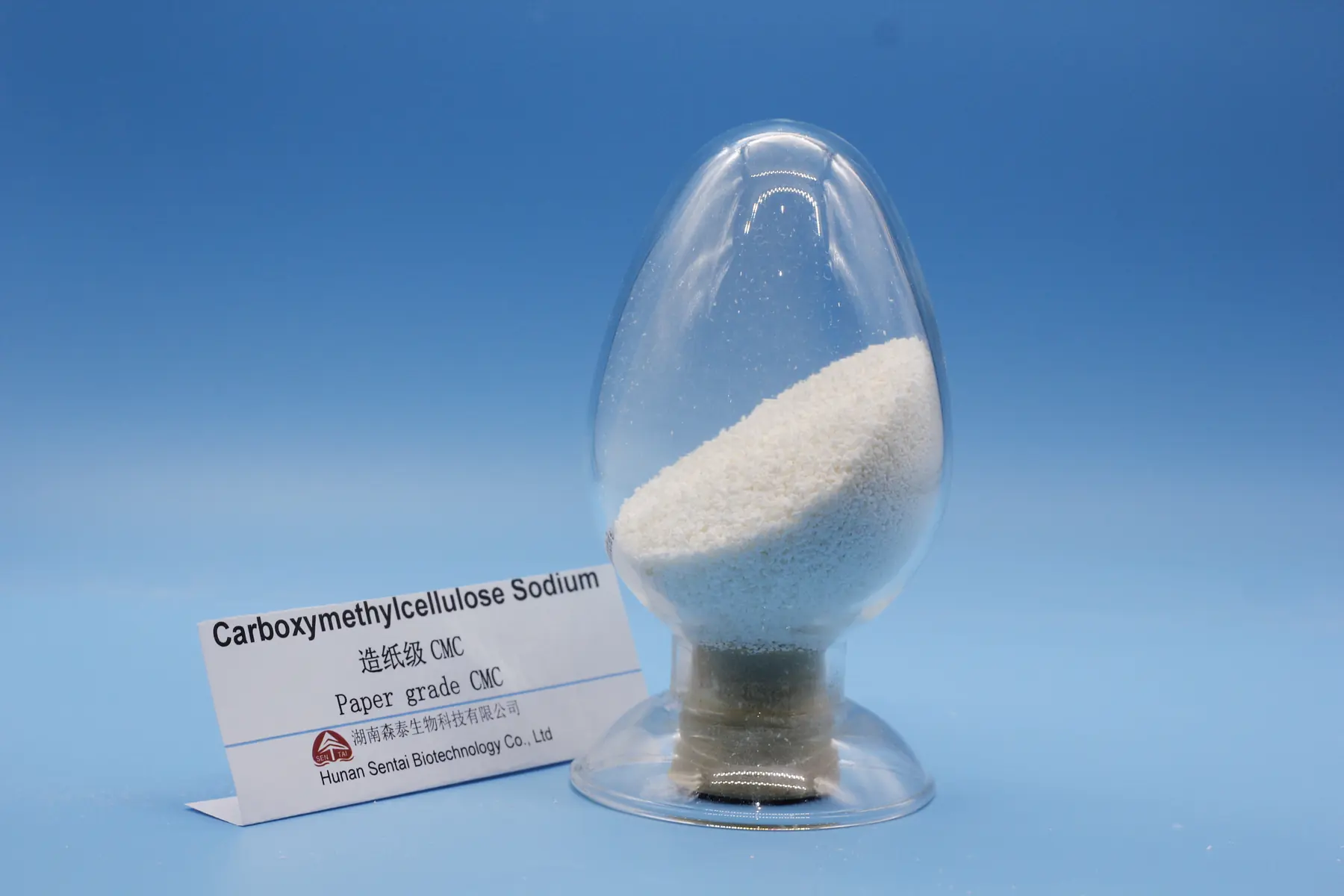
Paper and board mills rarely call us about CMC itself. They call about streaks at the blade, coating colour that thickens in the tank, linting on the printing press, or a customer complaining about print mottle. Many of these problems trace back to two additives: the water-retention agent in the coating colour and the film former in the size press. Sodium carboxymethyl cellulose (CMC) often does both jobs.
This guide lists the six problems paper producers bring to us most often, what causes each one, and how to fix it with the right CMC or carboxymethyl starch (CMS) grade.
1. Streaks, scratches and bleeding at the coating blade
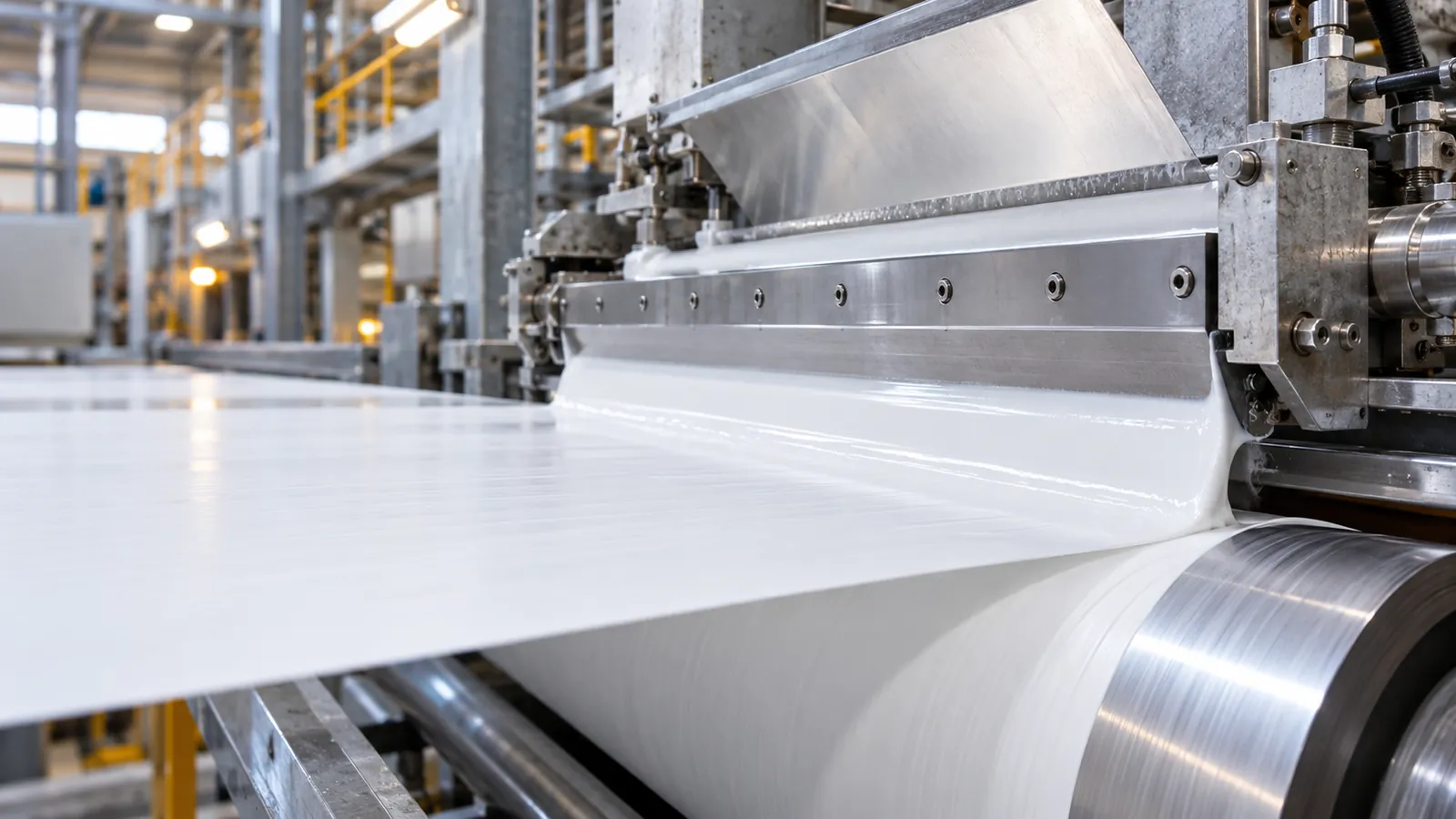
When the base paper pulls water out of the coating colour too quickly, the colour loses water before it reaches the blade. Solids rise, the colour starts to immobilise early, and particles build up under the blade, which shows as streaks and scratches. Too much viscosity at high shear causes the opposite problem: bleeding and an uneven coat weight.
- Improve water retention with CMC. Typical additions are 0.3–1.5 parts per 100 parts of pigment.
- Use a low-viscosity grade, roughly 7–50 mPa·s as a 2% solution. It raises water retention without pushing high-shear viscosity too high. A university study comparing CMC with a polyacrylate thickener found that CMC gave better water retention but raised viscosity considerably more, so the grade and dose have to be balanced.
- Make sure the CMC is fully dissolved. Undissolved gel particles and fibres cause streaks, pinholes and blinded filters on the coater. Sentai counts gel particles per 4 cm² of cast film and grades fibre and insoluble content for each paper grade.
2. Coating colour thickens or drifts in the tank
Viscosity that keeps rising for hours usually means the CMC was not fully hydrated when the colour was made. Viscosity that falls over days, often with a sour smell, points to microbial breakdown.
- Dissolve CMC separately, let it hydrate fully, then add it to the colour.
- Add a preservative to stored solutions and clean make-down tanks between batches.
- Keep make-down water consistent, and measure Brookfield viscosity at a fixed temperature so readings are comparable.
3. Linting, dusting and picking
Linting and dusting mean that fibres and filler at the surface are not held firmly enough; picking means the surface tears under a tacky ink. All three point to weak surface strength, usually from a size-press film that is too weak or too thin.
- Add CMC to the surface size, alone or with starch, to strengthen the film that binds fibres and filler at the surface.
- Use a medium-viscosity grade for the size press or film press.
- Where cost matters most, paper-grade CMS is an economical film former for surface sizing.
4. Poor ink holdout, print mottle and low brightness
If ink sinks into the sheet, colours look weak and uneven. A continuous CMC film closes the surface so more ink stays on top, improving holdout and print gloss. CMC is also an effective carrier for optical brightening agents (OBA), helping them work at the surface where they are seen.
5. Grease and oil showing through packaging paper
A CMC film at the surface improves the oil and grease resistance of food packaging and specialty papers. For food-contact papers, ask us for the compliance documents of the specific grade before you trial it.
6. Wet end: poor retention, low dry strength and sizing losses
At the wet end, CMC improves filler and fines retention, formation and dry strength, and it protects the efficiency of AKD and rosin sizing. Typical additions are 0.2–0.5%.
CMC or CMS?
Sodium carboxymethyl starch (CMS) thickens, binds and retains water at a lower cost than CMC. It works well in surface sizing and filler retention. CMC is the better choice where you need strong water retention in coating colours, long-term solution stability or a clear, strong film. Many mills use both: CMC in the coating colour and CMS in the size press.
Which Sentai grade to choose
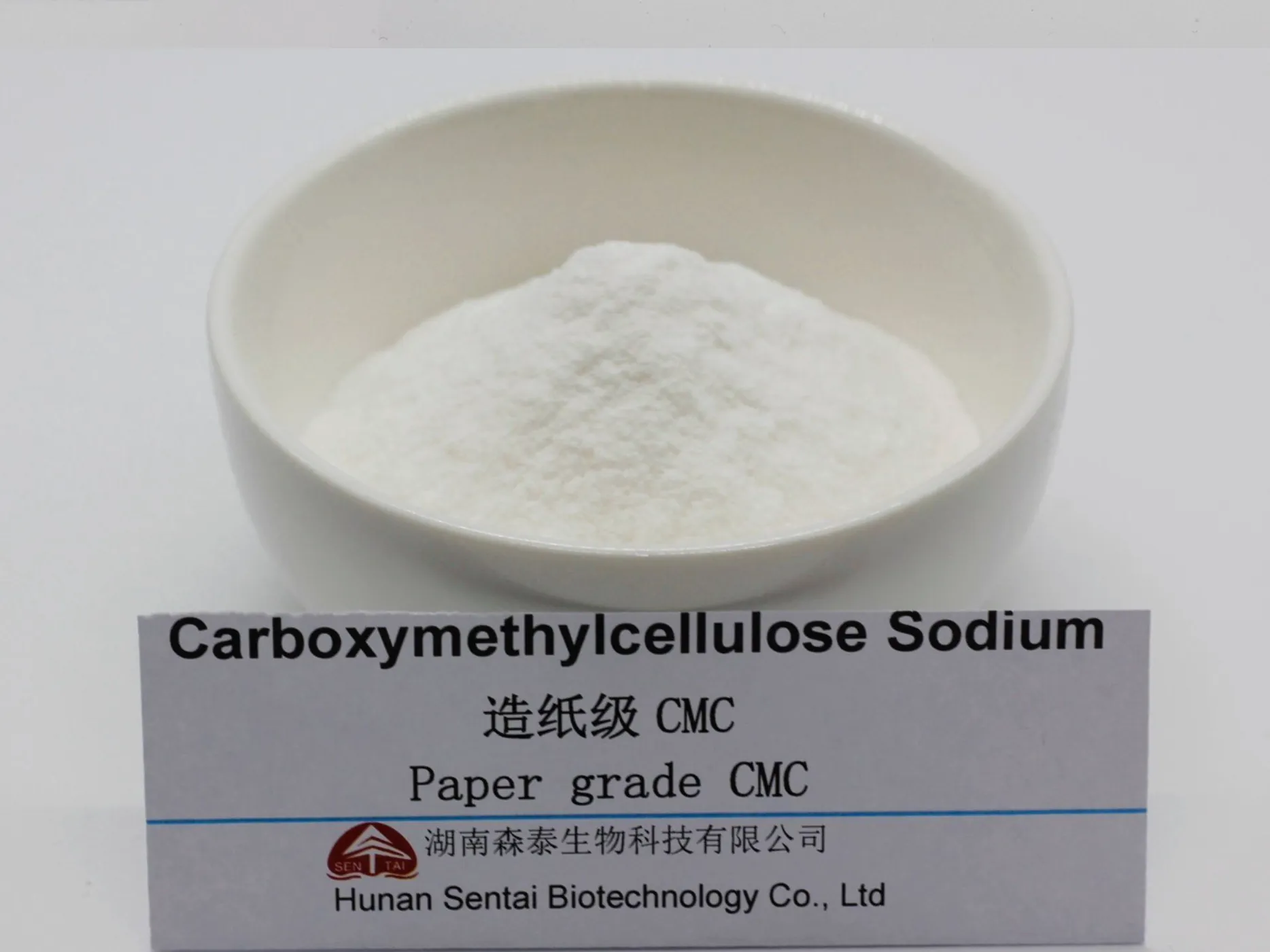
- Coating colours: paper-grade CMC (PC-series) at low viscosity, about 7–50 mPa·s as a 2% solution.
- Size press and film press: PC-series at medium viscosity, or paper-grade CMS-P (10–300 mPa·s as a 2% solution) for cost.
- Wet end: a PC-series grade matched to your machine, at 0.2–0.5%.
- Paper-grade CMC is supplied across DS 0.7–1.0 and 7–600 mPa·s (2% solution). Every batch ships with a certificate of analysis (COA).
Product details: sentai-cmc.com/products/paper-grade-cmc. Send us your coating formula or size-press conditions and the problem you are seeing, and we will recommend a grade and send a free sample: sentai-cmc.com/contact
FAQ
What causes streaks in blade coating?+
Most often the coating colour loses water to the base paper too quickly, so solids rise and particles build up under the blade. Undissolved gel particles in the colour and too much high-shear viscosity are the other common causes.
How much CMC is used in a coating colour?+
Typically 0.3–1.5 parts per 100 parts of pigment, using a low-viscosity grade so water retention improves without making the colour too viscous at high shear.
How does CMC reduce linting and dusting?+
In the size press, CMC forms a film that binds loose fibres and filler at the surface, raising surface strength so less material lifts off on the printing press.
Should I use CMC or CMS for surface sizing?+
CMS is the lower-cost film former and works well in many size presses. CMC gives a stronger, clearer film and more stable solutions. Many mills use CMS in the size press and CMC in the coating colour.
Sources