Reactive Printing Problems: Stiff Handle, Haloing and Alginate Cost
Stiff fabric after reactive printing, haloing outlines or costly sodium alginate? Where high-DS CMC fits as a printing thickener, and warp sizing fixes.
Sentai technical team · · 2 мин чтения
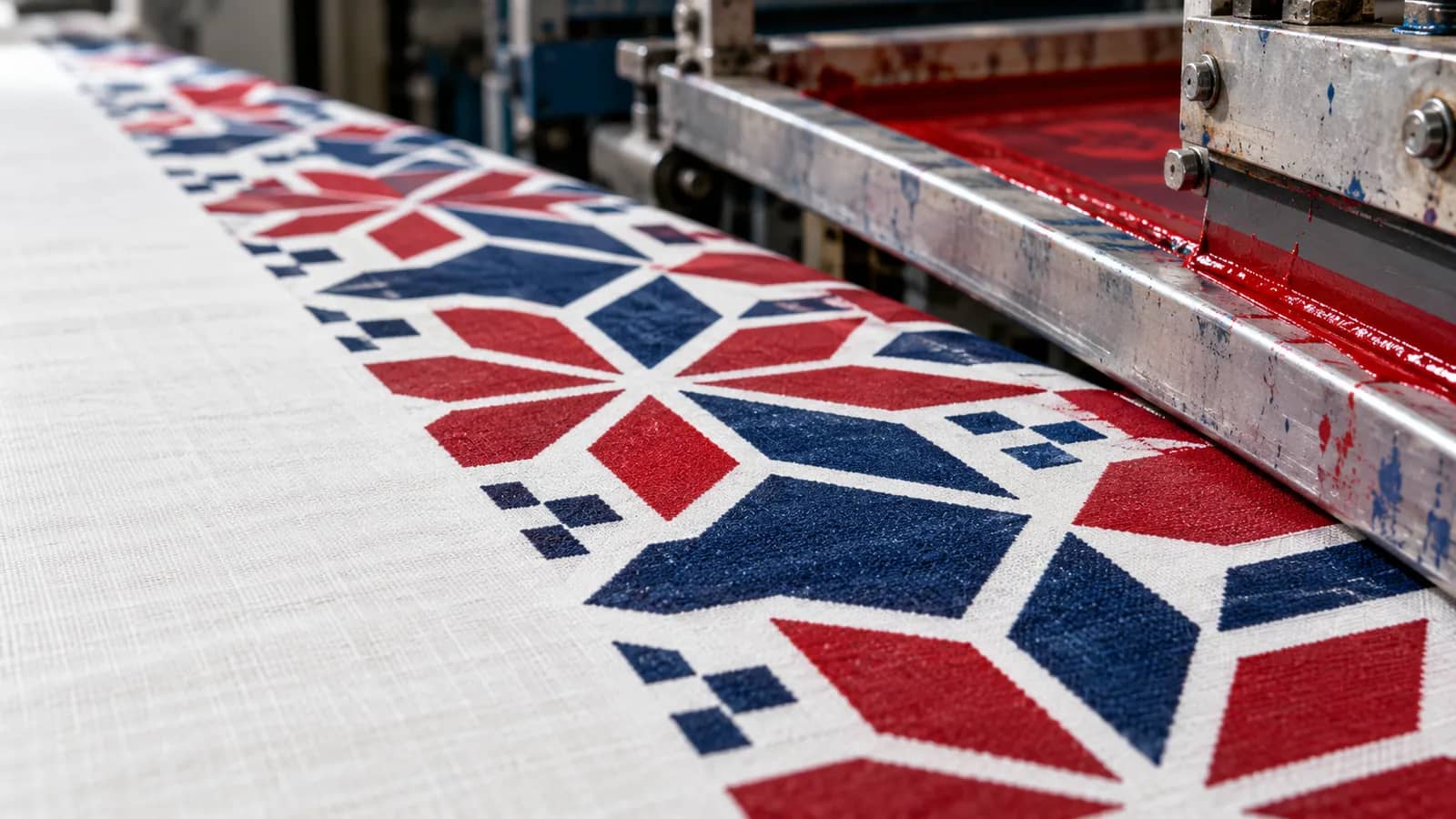
Sodium alginate has long been the standard thickener for reactive-dye printing on cotton, and its price and supply move with seaweed harvests. Many printers would like to replace part of it with sodium carboxymethyl cellulose (CMC), but those who try an ordinary CMC often see the same result: a stiff, harsh handle after washing. This guide explains why, how to choose a CMC that avoids it, and the other textile problems where CMC helps.
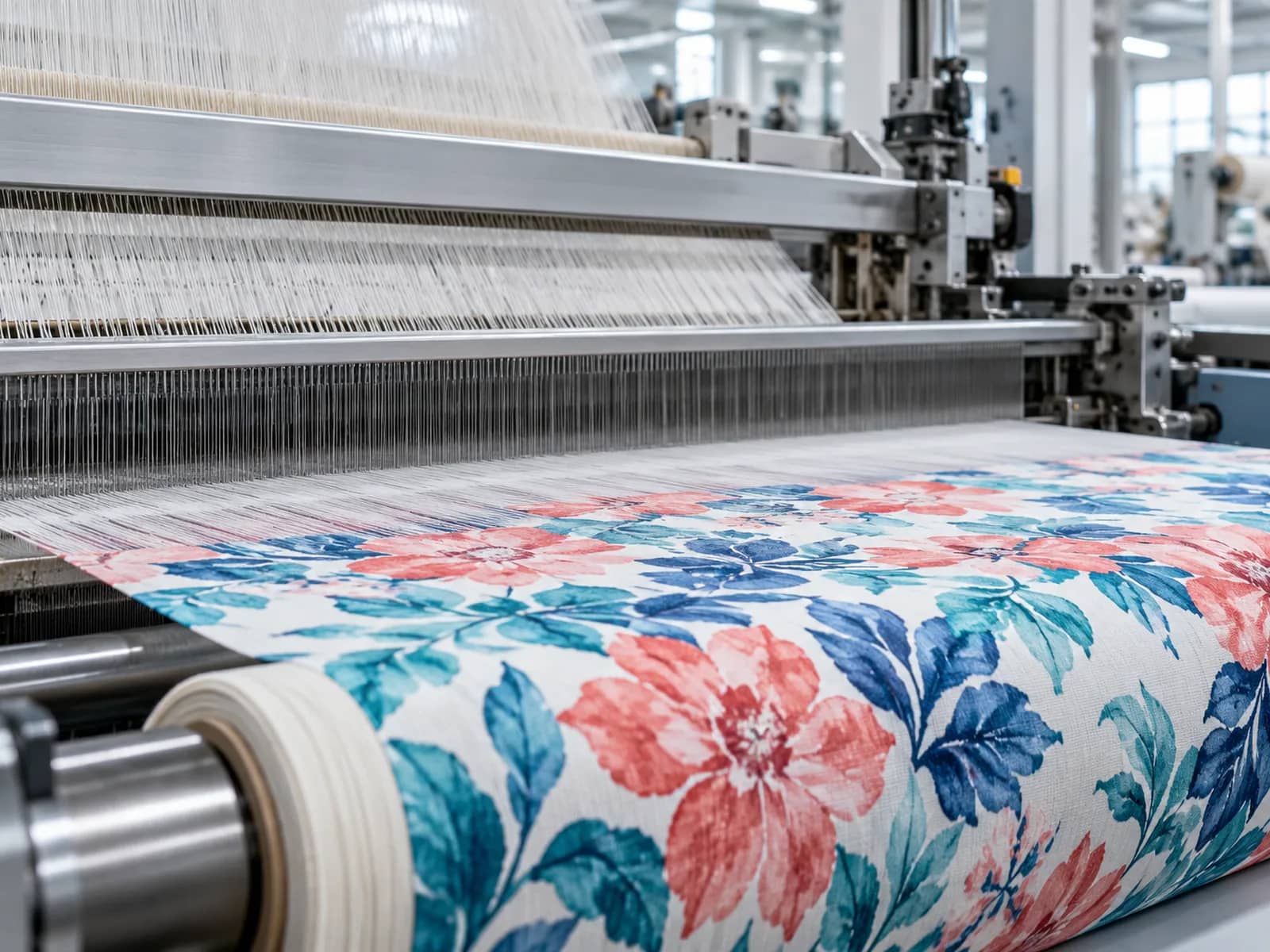
Why ordinary CMC stiffens reactive prints
Reactive dyes are designed to bond with the hydroxyl groups of cellulose. CMC is also cellulose, and any hydroxyl groups that were not substituted during manufacture can react with the dye too. The dye then fixes the thickener onto the fabric, it no longer washes out, and the print feels stiff. Alginate avoids this because its structure leaves very few reactive hydroxyl groups. A patent on CMC for textile printing describes exactly this hardening of the handle with low-substitution CMC, and claims that CMC with a degree of substitution (DS) of 1.3 to 2.2 can be used as an alternative to alginate thickeners.
The rule is simple: for reactive printing, the higher the DS, the better.
Problem 1: stiff handle after wash-off
- Use the highest-DS CMC available, not a standard technical grade.
- Start by replacing part of the alginate, for example a 50:50 blend, and test handle, colour yield and wash-off before going further.
Problem 2: haloing and blurred outlines
Haloing happens when the paste flows or the dye migrates beyond the printed area. It is a rheology problem: the paste must be thin enough to pass the screen, then hold its shape on the fabric.
- Adjust the viscosity of the paste with the CMC grade and dose; typical printing pastes use 0.5–2.0% CMC.
- Make sure the CMC is fully dissolved; undissolved particles block fine screens.
Problem 3: poor colour yield or uneven prints
- Check the paste for lumps and air, and filter it before printing.
- Test colour yield (K/S) of each thickener blend on your own fabric; the result depends on the fabric and the dye.
Problem 4: warp breaks in sizing and difficult desizing
In warp sizing, CMC forms a flexible film that protects yarns from abrasion on the loom, and it washes out more easily than starch.
- Use CMC alone or blended with starch to improve film flexibility and reduce warp breaks.
- Typical sizing additions are 0.3–1.5%.
Which Sentai grade to choose
- Reactive printing paste: IH-10, our highest-DS textile grade (DS at least 1.2, 800–1,200 mPa·s as a 1% solution). We recommend starting with a blend with alginate and testing handle on your fabric.
- Printing pastes needing lower viscosity: IM-10 (DS at least 1.0, 100–300 mPa·s) or IM-9 (300–500 mPa·s).
- Warp sizing and finishing: IH-8 (400–700 mPa·s) or IH-9 (800–1,200 mPa·s).
Product details: sentai-cmc.com/products/textile-grade-cmc. Tell us your dye class, fabric and current thickener, and we will send a free sample for a printing trial: sentai-cmc.com/contact
FAQ
Can CMC replace sodium alginate in reactive printing?+
Partly or fully, if the CMC has a high degree of substitution. Low-DS CMC reacts with reactive dyes and leaves the fabric stiff. Most printers start with a blend and increase the CMC share after trials.
Why does the fabric feel stiff after printing with CMC?+
Unsubstituted hydroxyl groups on the CMC react with the reactive dye, so the thickener is fixed onto the fabric and does not wash out. A higher-DS CMC has fewer of these groups.
How much CMC is used in a printing paste?+
Typically 0.5–2.0% of the paste, depending on the viscosity grade and the print design.
Is CMC used in warp sizing?+
Yes. It forms a flexible, abrasion-resistant film on the yarn and desizes more easily than starch. Typical additions are 0.3–1.5%.
Источники