Why Toothpaste Separates: Fixing Syneresis and Weak Ribbons with CMC
Toothpaste weeping water, slumping on the brush or turning grainy? The usual causes, how the CMC binder fixes them, and which grade suits fluoride or salt.
Sentai technical team · · 2 분 분량
Few things damage a toothpaste brand faster than a tube that weeps clear liquid when it is opened, or a ribbon that slumps flat on the brush. Most of these defects come back to one ingredient that makes up only about 1% of the formula: the binder. In most toothpastes that binder is sodium carboxymethyl cellulose (CMC), also known as cellulose gum.
This guide covers the four problems we hear about most from oral-care producers, what causes each one, and how to choose a CMC grade that prevents it.
1. Water separates from the paste (syneresis)
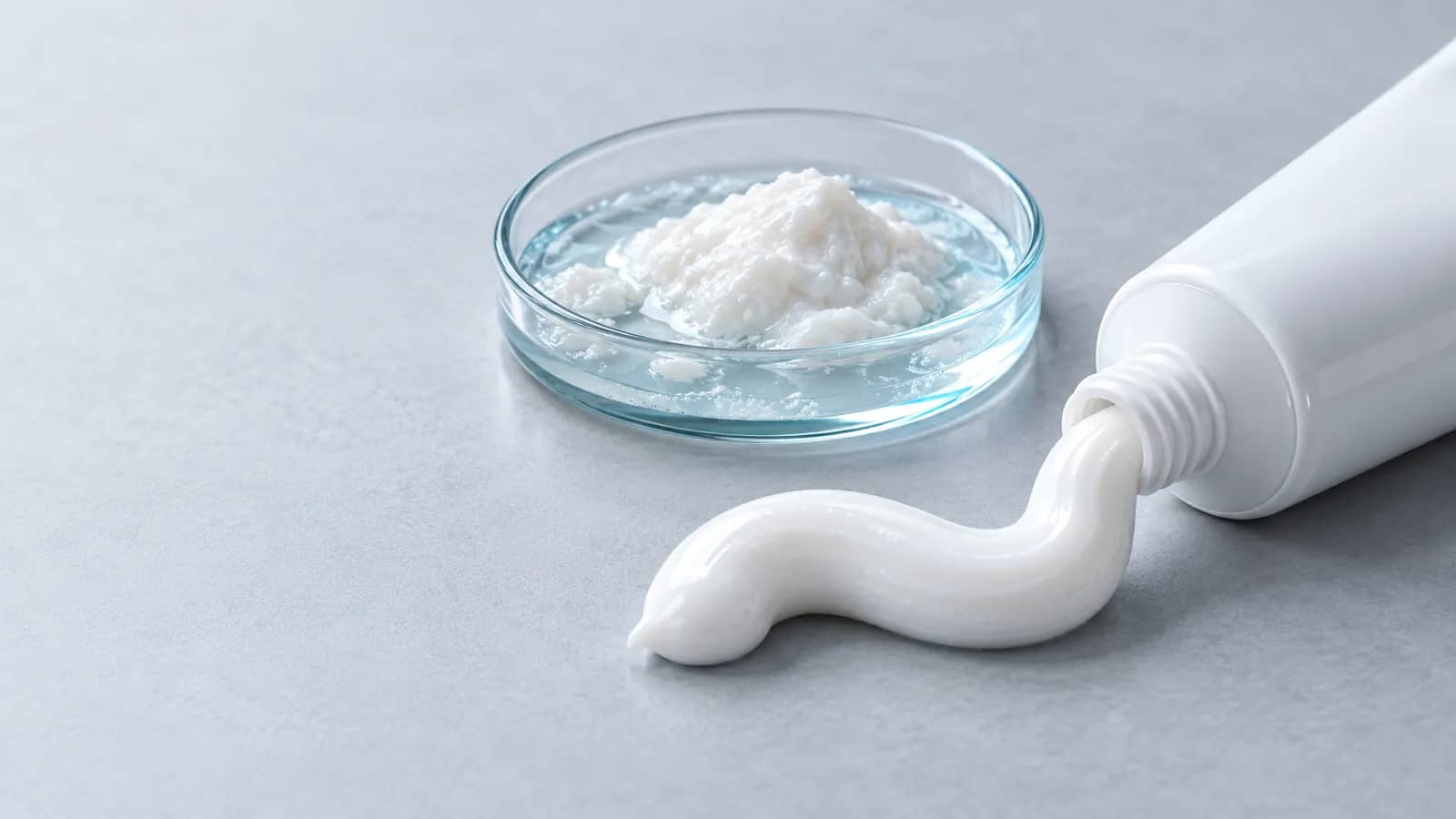
Syneresis is the slow release of liquid from the paste during storage. The binder's job is to hold the water phase in a stable network around the abrasive. When the network is too weak or breaks down, liquid separates, often first at the nozzle.
- Check the binder dose; typical toothpaste formulas use 0.5–1.5% CMC.
- Use a grade with enough viscosity for your solids level, and make sure it is fully hydrated before the abrasive goes in.
- Salts, fluoride and pyrophosphate compete for water and screen the charge on CMC. In these formulas choose a high degree of substitution (DS), which holds up better against electrolytes.
2. The ribbon slumps on the brush
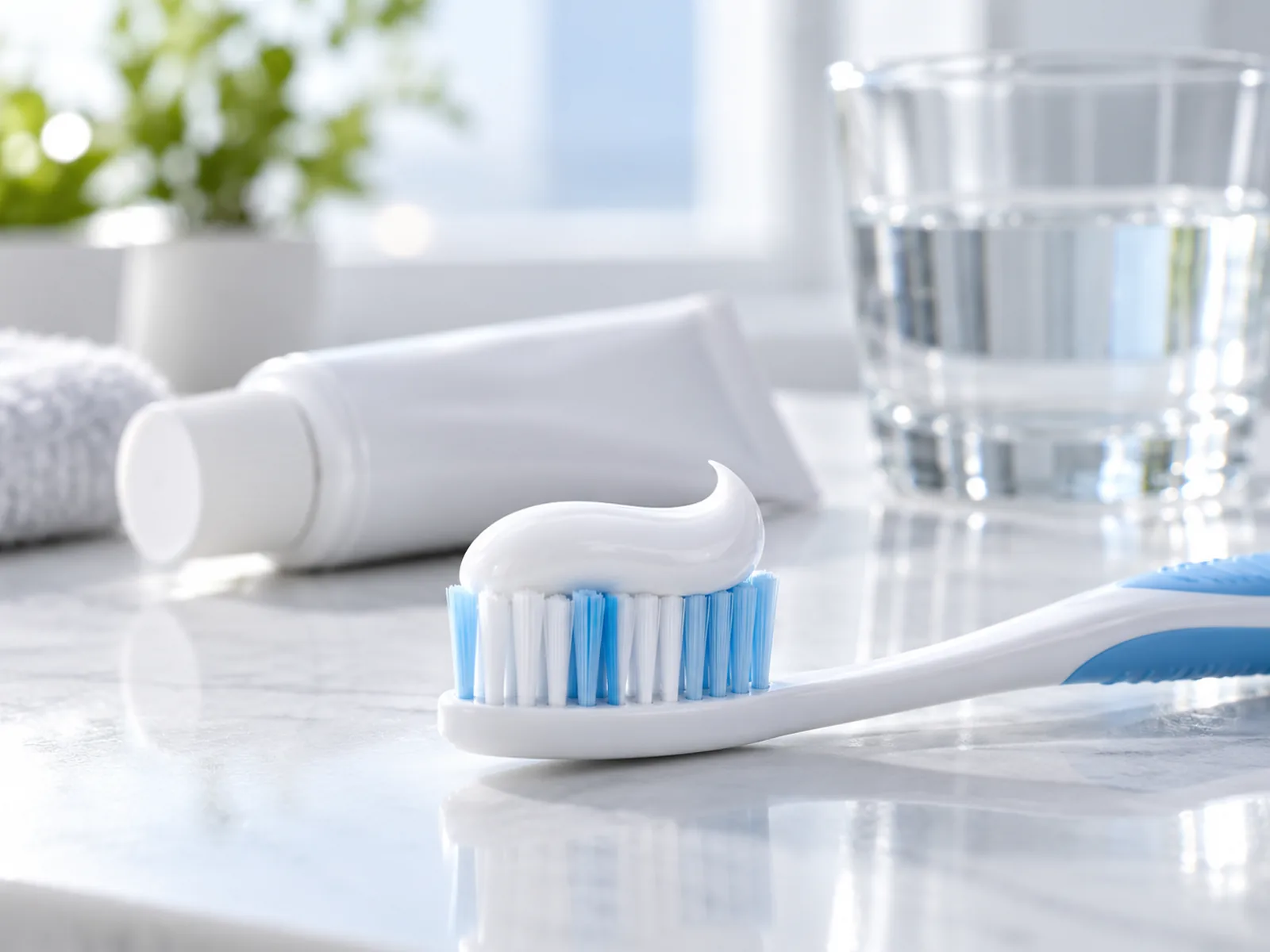
A good ribbon stands up on the brush and keeps its shape. A ribbon that slumps usually has too little structure at rest, even if its viscosity reads well while it is being mixed.
- Raise the binder level slightly or move to a higher-viscosity grade.
- Check that the CMC was not degraded by long, hot, high-shear mixing.
3. The paste turns grainy or lumpy
Grainy texture is often undissolved CMC rather than abrasive. CMC hydrates the moment it touches water, so powder added too fast forms gel-coated lumps.
- Disperse CMC in the humectant (glycerine or sorbitol) before adding water, or add it slowly into a vortex.
- Allow full hydration before the abrasive goes in.
4. Viscosity drifts during shelf life
If the paste thins over months, look at electrolytes, pH and microbial stability. High-DS grades are more stable against salts, and a suitable preservative system protects the binder from microbial breakdown.
Is CMC safe in toothpaste?
Sodium carboxymethyl cellulose is the same substance authorised as a food additive under the code E 466. The European Food Safety Authority re-evaluated the celluloses, including E 466, in 2018.
Which Sentai grade to choose
- Salt, fluoride or herbal formulas: IH9 (DS at least 0.95) or IH10 (DS at least 1.0), 200–400 mPa·s as a 1% solution.
- High viscosity at a low addition: CH8 (2,000–2,500 mPa·s) or CH9 (800–1,200 mPa·s).
- High purity: 500T, at least 99.5% purity, 400–700 mPa·s.
Product details: sentai-cmc.com/products/toothpaste-grade-cmc. Send us your formula type and the problem you are seeing, and we will recommend a grade and send a free sample: sentai-cmc.com/contact
FAQ
How much CMC is used in toothpaste?+
Typically 0.5–1.5% of the formula, depending on the abrasive, the humectant level and the viscosity grade chosen.
What causes water to separate from toothpaste?+
Usually a binder network that is too weak for the formula: too little binder, a grade with too low a viscosity, incomplete hydration, or electrolytes such as salts and fluoride that weaken a low-DS CMC.
Which CMC grade is best for fluoride toothpaste?+
A high-DS grade, because more uniform substitution keeps the paste stable against fluoride, pyrophosphate and other salts. At Sentai that means IH9 or IH10.
How do you stop lumps when adding CMC?+
Disperse the powder in glycerine or sorbitol first, or add it slowly into a strong vortex, and let it hydrate fully before adding the abrasive.
출처