High MgO in Your Concentrate? How CMC Depresses Talc in Flotation
Talc and serpentine floating into your nickel or copper concentrate? How CMC depressants cut MgO, the dosage and grade to try, and CMC as a pellet binder.
Sentai technical team · · 3 분 분량
Naturally floatable gangue is one of the most expensive problems in sulphide flotation. Talc, serpentine, chlorite and other magnesium silicates float alongside the valuable minerals, dilute the concentrate and push up its MgO content. Smelters penalise high-MgO concentrate, and raising the collector dose to recover more metal usually brings more gangue with it.
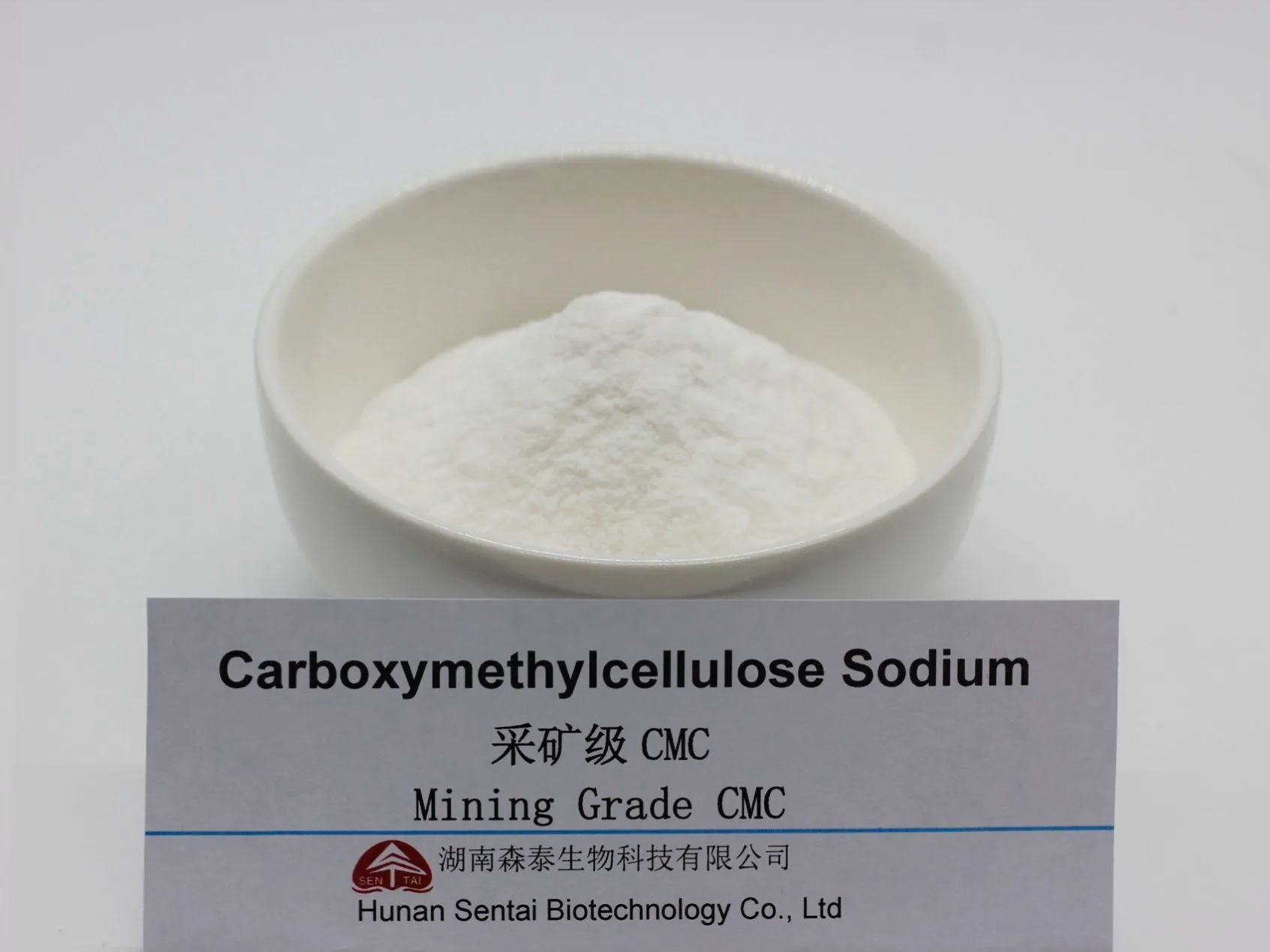
Sodium carboxymethyl cellulose (CMC) is one of the standard reagents for this problem. This guide explains why the gangue floats, how CMC stops it, the mistakes we see most often, and which Sentai mining-grade CMC to test.
Why talc and serpentine end up in the concentrate
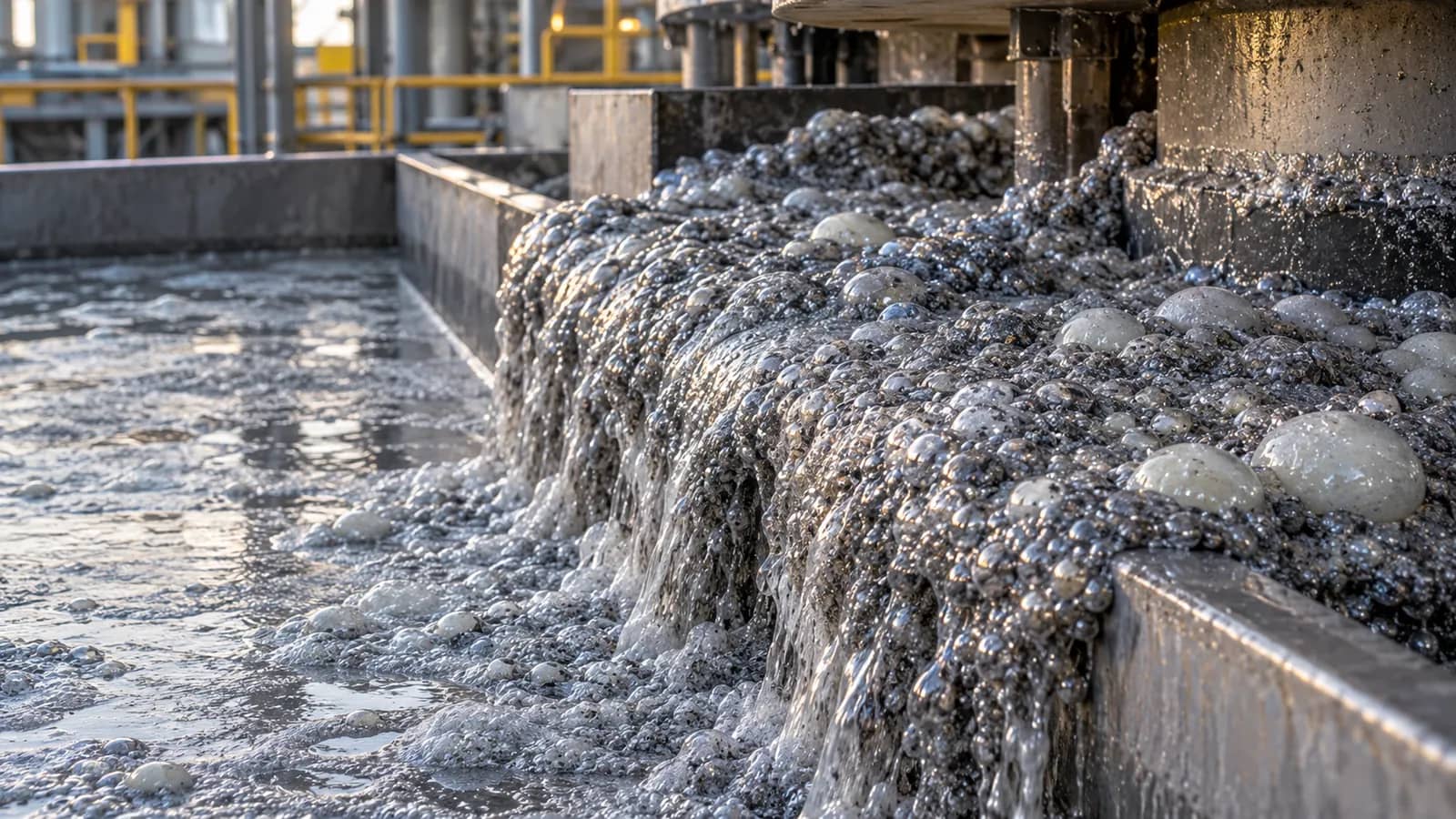
Talc is naturally hydrophobic, so it floats without any collector. Fine serpentine and other magnesium silicates coat sulphide surfaces as slimes or are carried into the froth by entrainment. Both routes add rock and MgO to the concentrate, and both get worse when the circuit is pushed for recovery.
How CMC depresses gangue
CMC is a water-soluble anionic polymer. It adsorbs on talc and magnesium-silicate surfaces and makes them hydrophilic, so they stay in the pulp while the collector-coated sulphides still float. Research on tailor-made CMCs found that MgO depression was most favourable in mildly acidic pulp, where electrostatic repulsion between CMC and talc is lowest, and that electrolytes in the process water change how well CMC works. In practice this means two plants can need very different doses of the same product.
Common problems and how to fix them
Concentrate MgO stays high
- Add CMC in conditioning, before the collector, and give it time to adsorb.
- Increase the dose stepwise in lab tests; typical additions are 50–500 g/t of ore.
- Split the addition between rougher and cleaner stages: cleaner additions catch gangue the rougher let through.
Metal recovery drops
- At high doses CMC can also slow the flotation of sulphides. Find the dose at which MgO falls without losing recovery, rather than simply adding more.
- Check pH and water chemistry: calcium, magnesium and other ions in recycled water change adsorption.
The reagent is hard to dose
- Make up a stock solution with good stirring and let it hydrate fully before use.
- For dust-free dosing, use a granulated grade.
The same polymer as an iron-ore pellet binder
Bentonite is the standard binder for iron-ore pellets, but it contains a large amount of silica that must be fluxed in the blast furnace. CMC contains no silica, which is why it is used to replace part or all of the bentonite. The trade-off is strength: CMC alone gives lower dry and fired strength at economical doses, and studies of full bentonite replacement needed an inorganic additive, such as calcium carbonate, to reach satisfactory strength after induration. Many plants therefore replace part of the bentonite with CMC.
Which Sentai grade to test
- Flotation depressant: low-viscosity grades OL6, OL9 and OL6-A (100–400 mPa·s as a 2% solution), or the granulated OL6-G (300–500 mPa·s) for dust-free dosing.
- Iron-ore pellet binder: high-viscosity OH6 and OH9 (5,000–7,000 mPa·s as a 2% solution) and OVH6 (at least 7,000 mPa·s), typically at 0.03–0.1%.
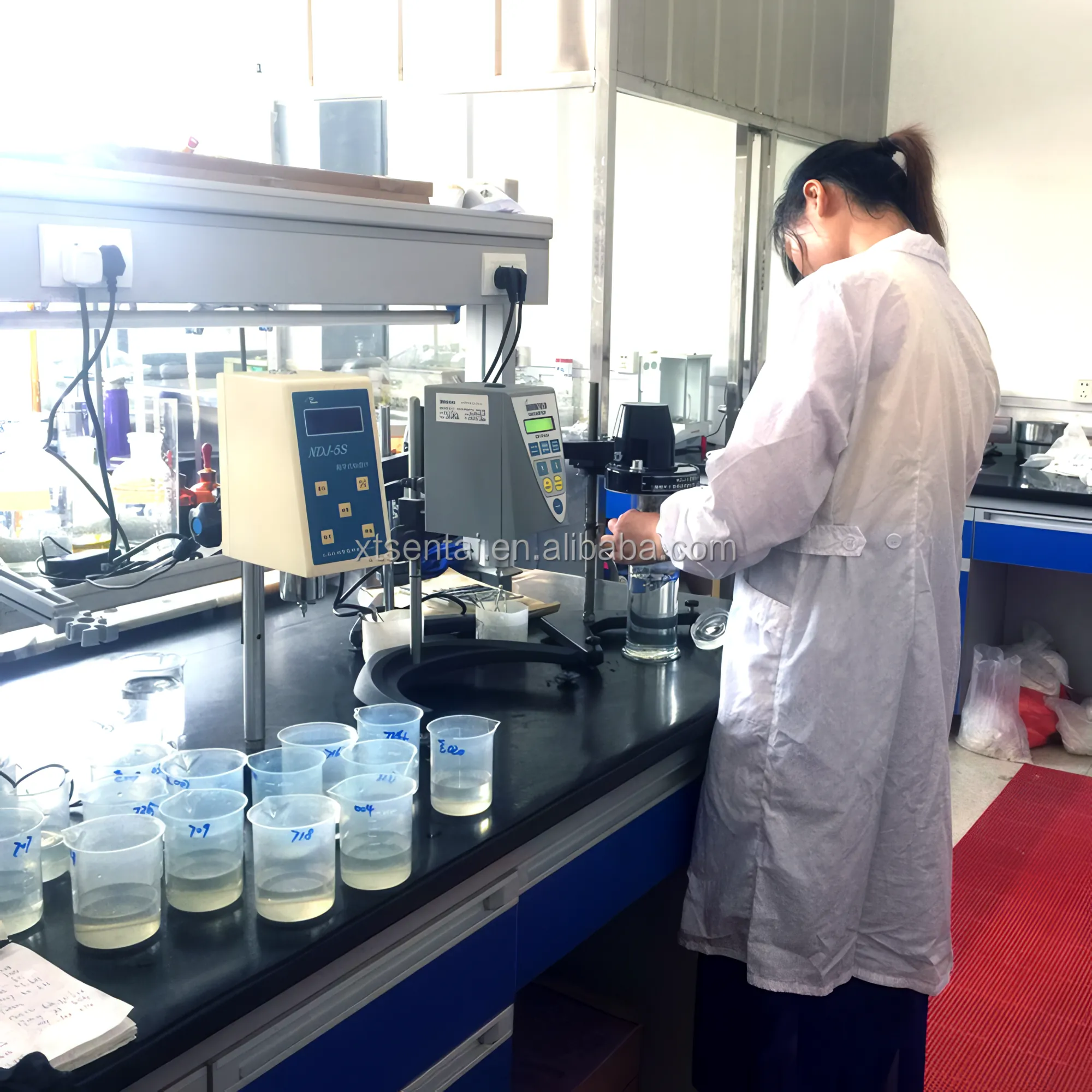
- Every batch ships with a certificate of analysis (COA), and we send free samples for lab flotation and pelletising tests.
Product details: sentai-cmc.com/products/mining-grade-cmc. To choose a grade, send us your ore type, current depressant and dose, and a process-water analysis: sentai-cmc.com/contact
FAQ
What dosage of CMC is used as a flotation depressant?+
Typical additions are 50–500 g/t of ore, depending on how much talc and serpentine the ore contains and where the CMC is added. Start low in lab tests and increase until concentrate MgO falls without a loss in metal recovery.
Where should CMC be added in a flotation circuit?+
Usually in conditioning, before the collector, and often split between the rougher and cleaner stages. Cleaner additions target entrained gangue that passed the rougher.
Is CMC the only depressant for talc?+
No. Guar gum, dextrin and modified starches are also used. Which works best depends on the ore and the process water, so compare them side by side in lab tests.
Can CMC fully replace bentonite in iron-ore pellets?+
It can, but fully organic pellets are usually weaker after firing. Many plants replace part of the bentonite with CMC, or add an inorganic additive, to cut silica while keeping pellet strength.
출처
- Leppinen J. et al., Depression of Gangue Minerals Using Tailor-Made CMCs in Sulfide Ore Flotation, AusIMM Centenary of Flotation Symposium (2005)
- Quon D.H.H., Pelletizing of Iron Ores by Partial or Full Substitution of Bentonite by Organic Binders (1989)
- US Patent 4,919,711, Binder for metal-containing ores (Aqualon)